UNDER PRESSURE: How to Apply Freedivers’ Best Practices to Business and Creativity
Exclusive from Kateryna Sadurska.
The creative industry traditionally exists in a state of constant “creative neuroticism,” where every deadline is a fresh challenge and the background noise of information never subsides for a moment.
How do you survive under this pressure, protect your mental health, and consistently land unique ideas?
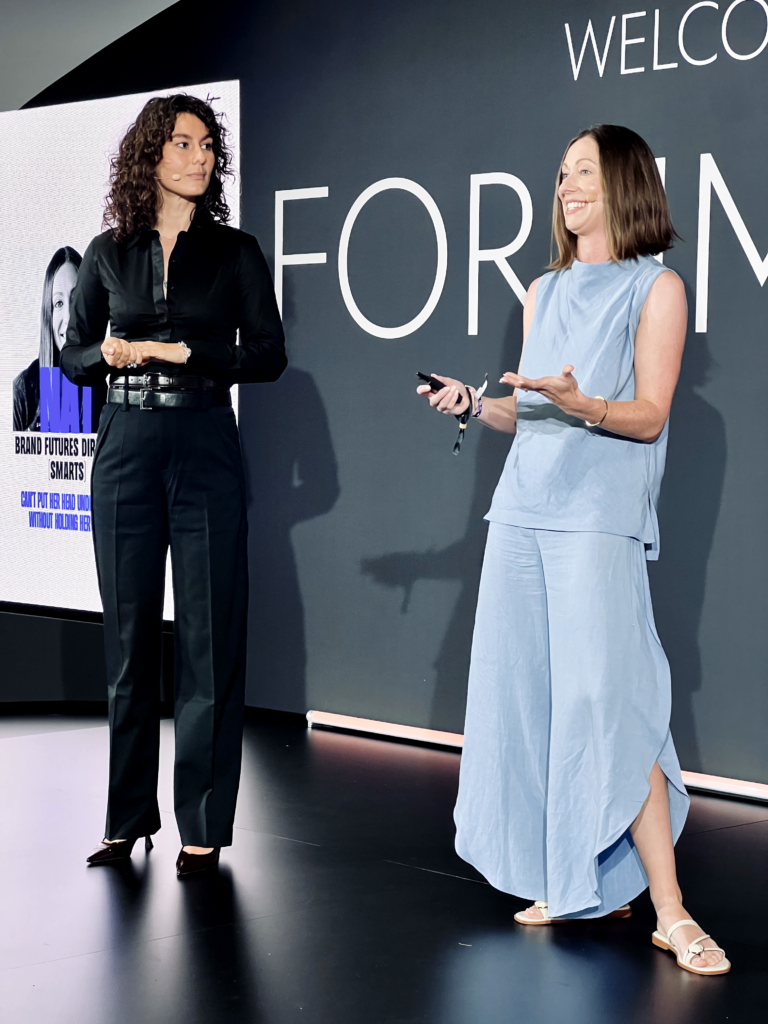
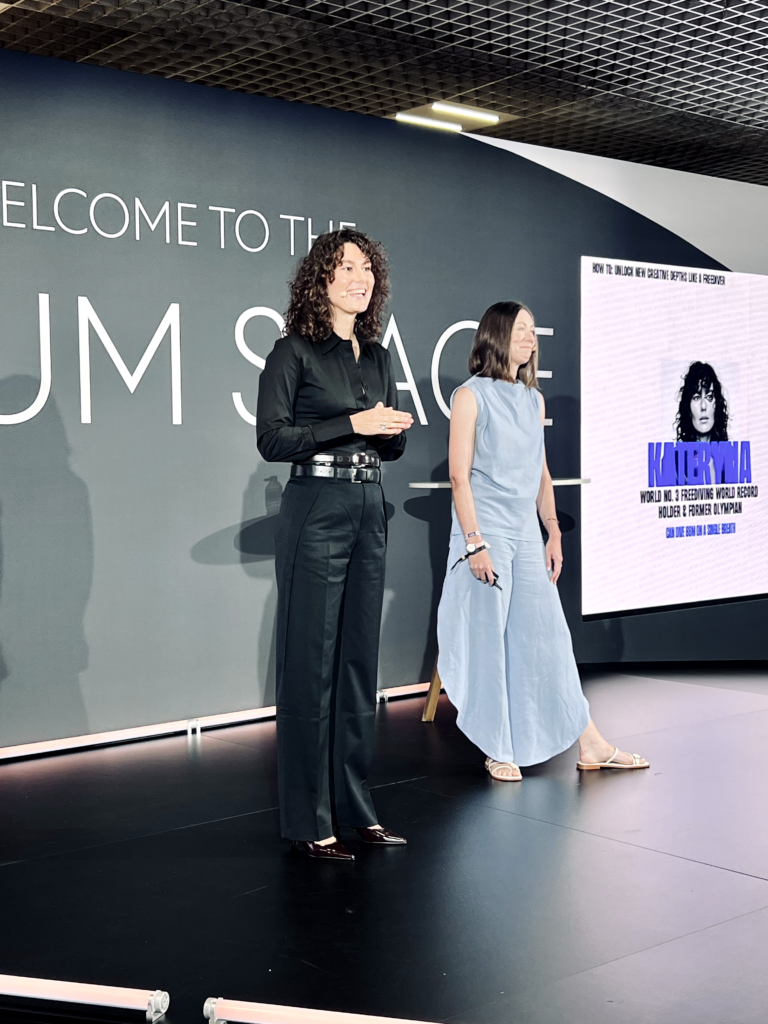
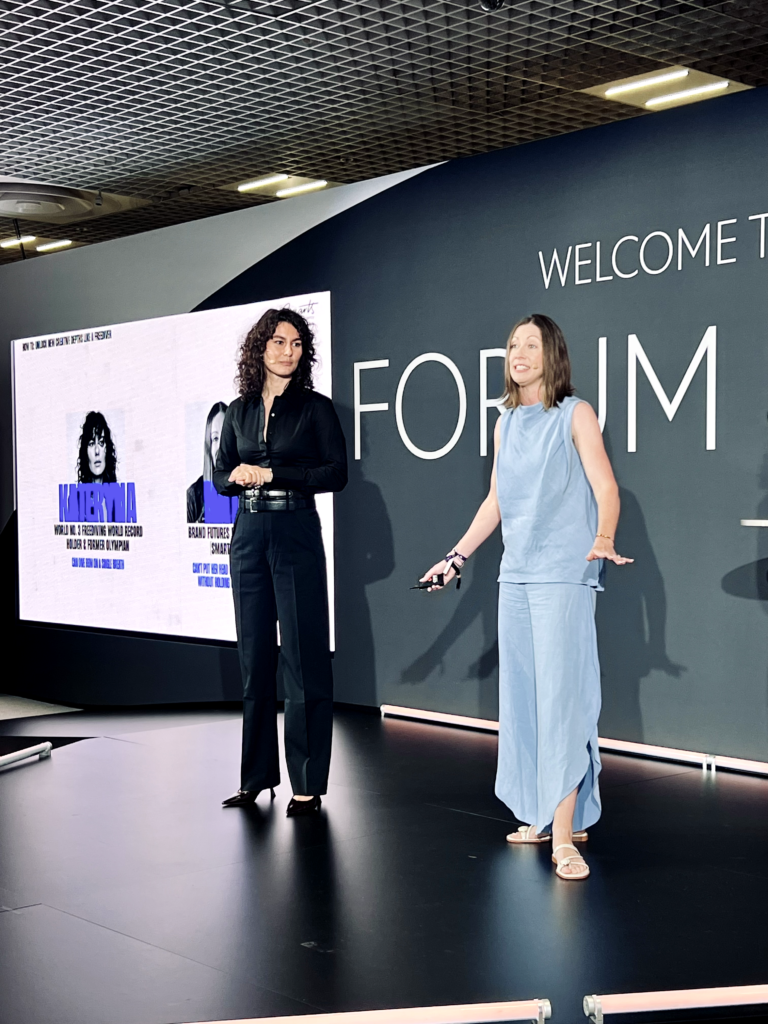
On stage at the world’s leading festival of creativity, Cannes Lions 2026, Ukrainian Olympic swimmer and world record-holding freediver Kateryna Sadurska, alongside Natalie Moore, Brand Development Director at the British agency Smart, presented a unique philosophy on working under pressure to achieve superior business results.
Yet, aren’t these universal principles for nurturing creativity—not only within competitive markets, but through the daily endurance required under the ongoing strain of a full-scale war?
We met with Kateryna in the cool relief of the press arena at the heart of the Cannes heat to expand on the insights from their joint session with an exclusive lens on the event’s behind-the-scenes dynamics, cultural diplomacy, and personal challenges.
Julia Brosko: What were your expectations for participating in Cannes Lions, and what did you end up gaining from the experience?
Kateryna Sadurska: I expected to gain a new kind of experience. It’s a completely different scale. I’ve done public appearances in various formats before—sports are also a form of public performance in a way (World Championships, the Olympic Games, where the audience is even larger than here). But Cannes was a different format: one-on-one with the audience, and right before stepping onto the stage, I felt a bit nervous.
However, my experience with body awareness, breathwork, and regulating the nervous system helped. Freediving greatly develops self-regulation, so I managed to cope and even enjoy the process.
It’s similar to a multi-stage competition: the first day is always the most nerve-wracking. Even if you look calm on the outside, your body inside senses the approaching challenge. By the subsequent presentations, I felt much more relaxed.
I consider the goal 100% achieved. Everyone I spoke with, including representatives from the London agency that invited me, was very pleased. At lunch after the talk, everyone got so enthusiastic about the topic that it feels like the entire agency is about to take up freediving (smiles).
Julia Brosko: During the talk, there was an incredible sense of synergy, even though exploring creativity through the lens of freediving seems like a bold challenge. What was the preparation process like together with your co-speaker, Natalie Moore?
Kateryna Sadurska: My co-speaker, Natalie Moore, initiated this talk. For the agency, it was also a first-of-its-kind experience—instead of presenting a standard corporate client case study, they decided that everyone at Cannes needed to “slow down” a bit.
I was truly honored that out of many high-profile freedivers, they chose me—it was a real match in values. We met several times in London and worked through the presentation in detail, so on stage we stood as a genuine team that had dived into a deep level of connection.
Practices from the Cannes Lions Stage: Three Steps to Prepare for the Dive
In freediving, diving without any equipment demands absolute mental and physical discipline. Kateryna broke the women’s world record in the most challenging discipline (constant weight no fins, relying solely on her own body) extending it from 74 to 88 meters. Her approaches to managing pressure can be directly integrated into the creative process through three key concepts.
1. Declare Your Depth in Advance
In freediving, athletes are required to declare their exact dive depth the evening before. We don’t decide how deep to go when we are already halfway down. Every additional meter alters the nervous system’s response, and without mentally preparing for that exact target in advance, the body will lock up out of fear.
Creative Adaptation: We are used to setting deadlines and briefs, but we rarely ask ourselves before starting a project: “How deep am I planning to go this time to create something truly unique?” Consciously defining the scale of the task shields your nervous system from chaos during the process.
2. Enter the Challenge Well-Resourced
Before making a dive, you must expand your emotional capacity and master fear. Knowledge eliminates fear, but building that resilience takes time—it cannot be done mid-dive. Ahead of competitions, Kateryna minimizes screen time, simplifies daily decision-making, and practices meditation to cultivate inner stillness.
Creative Adaptation: Often, we tackle important projects when we are already exhausted—in the middle of constant notifications, chats, and unresolved tasks. Trying to “push through” in this state blocks deep thinking. To catch the “big fish” (a truly deep idea), you first need to clear your mind of the noise.
3. Enter a Flow State
Right at the dive line, it is crucial to disconnect from the external world and turn inward through simple, controllable actions: breathwork and scanning the body for unnecessary tension. Our minds require a single focus; otherwise, panic sets in.
Julia Brosko: Do you have other successful examples of collaborations with businesses or women’s communities?
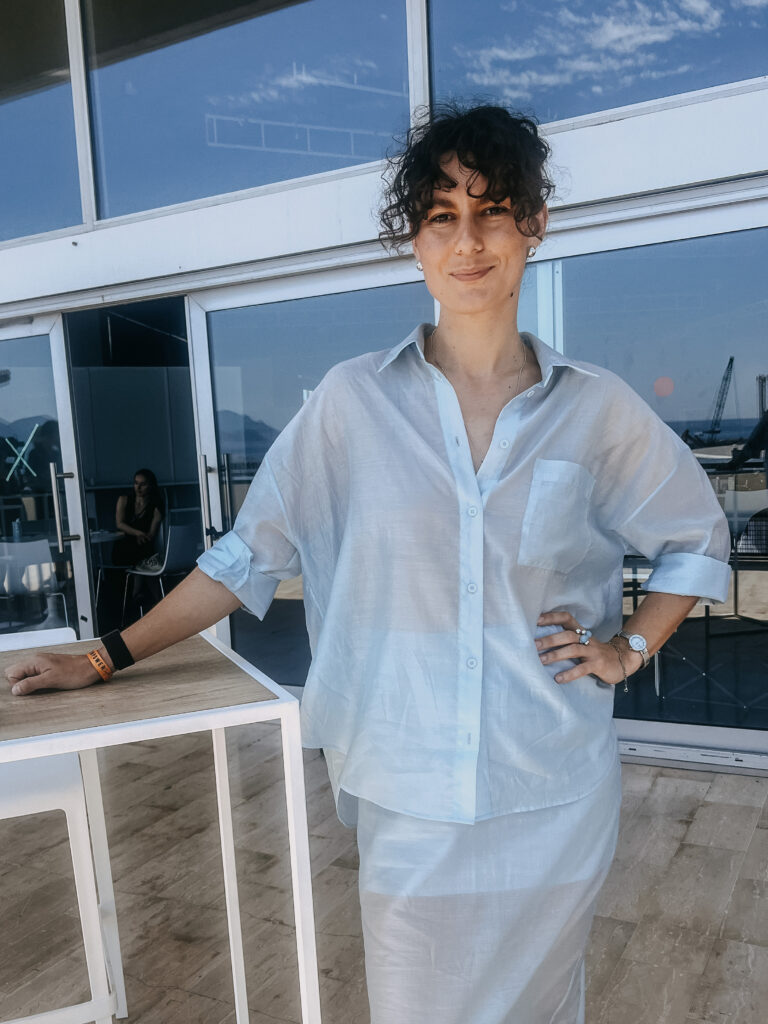
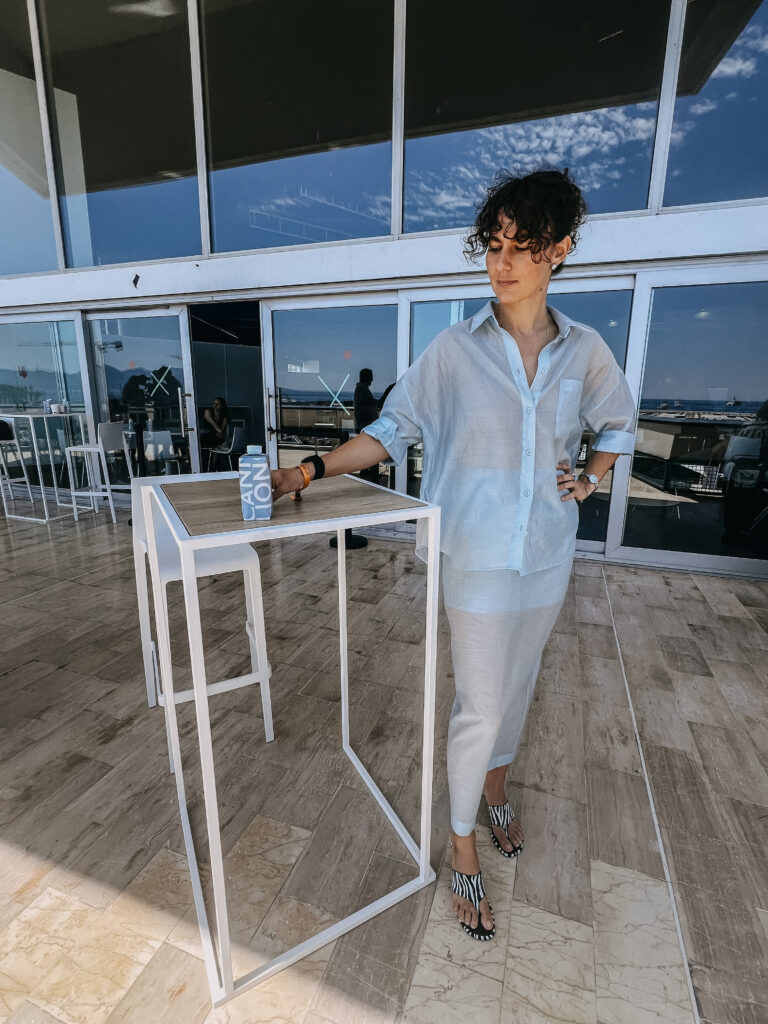
Kateryna Sadurska: I actively engage with various projects. For example, for the Cannes presentation, I consciously chose an outfit from the brand Bettter by Ukrainian designer Julie Pelipas. Julie had always supported my athletic achievements on social media, so I simply reached out to her. Their aesthetic and the way they communicate with the world deeply resonate with me. After the talk, many people asked about my look, and in those moments you clearly feel your additional role as a cultural ambassador.
I also receive immense support from women. While teaching freediving to beginners, I met incredible women who inspired me during our interactions. That is how our intimate women’s community, Tiger Club, was born. We travel to dive together, exchange energy, ideas, and support—and this community now thrives with a vibrant life of its own.
Julia Brosko: From the stage, the very first thing you shared was that you were born in Ukraine. How do you balance advocating for Ukraine in front of international audiences when the event’s primary focus lies elsewhere?
Kateryna Sadurska: I try to speak about Ukraine whenever I have the opportunity. In sports, especially during the war, our primary duty is to remind the world of what is happening back home. On the athletic stage, I do this constantly.
At Cannes, while the presentation focused primarily on the dive process itself, it remains an integral part of my story. It is what shaped me. My achievements would not exist if I hadn’t reinvented myself after my previous life stopped functioning as it used to. Of course, some people may not be ready to hear it, but you simply have to find the right words to convey this truth.
Practices from the Cannes Lions Stage: The Freefall Experience
“I lie on the surface. The sun is shining, it’s warm, but beneath me lies about 200 meters of water, and down there, it’s very dark. The pre-dive nervous energy never completely disappears, even after 26 years in sports. You simply learn to handle it a little better each time.” — Kateryna Sadurska
During the first few meters of a dive, high buoyancy requires active effort. However, as depth increases, the air in the lungs compresses, bringing about the most critical phase: the freefall.
At this point, you must let go of all resistance, relax your muscles, and trust the water pressure—which, at depth, no longer feels like a threat, but like a firm embrace.
The more you resist the pressure, the more oxygen you consume, increasing the risk of error. At the bottom, the freediver retrieves a special tag—proof of a successful dive—and begins the journey back to the surface.
Julia Brosko: On the surface, you look completely serene, smiling, and full of energy. What internal challenges are you facing right now?
Kateryna Sadurska: Constant challenges have become my way of life. Right now, my main goal is finding my place for the next few years. My home is in Ukraine, but I can’t spend much time there while balancing intensive training—trying to train in Kharkiv during the first years of the war was physically and mentally exhausting.
Now, many new projects are emerging, and my presence in Cannes is an attempt to sense where I can deliver the greatest value to the world. I’ve realized something crucial: in your career, you must derive genuine joy from what you do. That’s where you are most effective. If you act solely on external demand without an internal resonance, your resources will quickly drain and lead to burnout. There must be a constant, equal exchange: you give, but you must also receive something in return.
Practices from the Cannes Lions Stage: Shifting Perspective
After diving into the depths, every freediver returns to the surface transformed. Kateryna and Natalie’s joint presentation at Cannes leaves us with three philosophical anchors for navigating work under stress:
1. The Deeper You Dive, the Easier It Gets
In today’s world of automation, depth and focus must become a conscious choice. The more frequently we practice deep concentration, the more natural the process becomes. Depth is our primary competitive advantage.
2. The Problem Isn’t the Pressure—It’s the Resistance to It
External pressure is inevitable. Fighting it and panicking drains our energy and inner resources. However, when we learn to accept the pressure and work with it, it transforms into a force that supports, focuses, and propels us forward.
3. Depth Is the Ambition, but Returning Is the Imperative
We don’t go into the depths merely to remain there. Our goal is to find the “big fish” (the idea, the meaning, the solution), secure it, and bring it back to the surface to share with others. True mastery lies in the capacity to navigate this journey both ways—and return refreshed and transformed.
Recorded and interviewed by: Julia Brosko.
Editing and translation: Yanina Provotar.
Retouching: Olena Chykylova.