Summer Coffee Talk with Olga Campofreda: “On social media, we often seem to talk to people, but we aren’t actually engaged in a dialogue. We are conducting parallel monologues”
We sat down with the Italian writer, PhD in Italian Studies, youth culture researcher and curator of the Miu Miu literary club, Olga Campofreda, to discuss nostalgia for an internet that never came to be, the online personas we construct daily, the transformation of the modern heroine, the algorithmic gaze on female visibility, and which texts can foster creativity versus those that bring solace.
Julia Brosko: Let’s start with the main trend that feels so palpable right now: analog is the new black. This almost global, multi-faceted escape into the analog world. How do you sense or conceptualize this trend in literature and book culture? Do you see a shift back to paper, toward a different style of storytelling?
Olga Campofreda: Ever since 2020, our lives have become deeply intertwined with online reality. Our online presence has expanded—and for many, it became an absolute necessity. Not just our leisure time, but our work was almost entirely swallowed up by the online space—the “online condition,” if you will.
And gradually, I think we reached a saturation point. A moment when we realized: that’s enough, we need a way out. Though today, stepping away from the online universe is a bit of a luxury. It’s an option not available to everyone, because daily life leaves less and less room for us to exist offline.
That’s why the analog is now something you have to actively seek out. It’s an opportunity you have to curate. Living analog today means deliberately constructing a space for it.
There is a certain vintage, nostalgic aura to it. It reminds me of my teenage years when I used to go to flea markets looking for vinyl records or old books. I had an iPod, I could listen to MP3s on my computer, but I went specifically for vinyl because it felt like that was how I truly owned the music I listened to. I had a physical connection to the culture I was consuming.
I think something similar is happening with literature and books today. On one hand, there’s that same nostalgic, vintage charm. On the other, there’s a tangible sense of owning the story rather than merely consuming it. A book becomes a piece of our identity.
And here lies an interesting paradox: we can share a physical book online. The very act of displaying a paper book in a digital space speaks volumes about us—our taste, our identity.
Clearly, it is extremely difficult for us to completely disentangle ourselves from the online persona we curate every day.
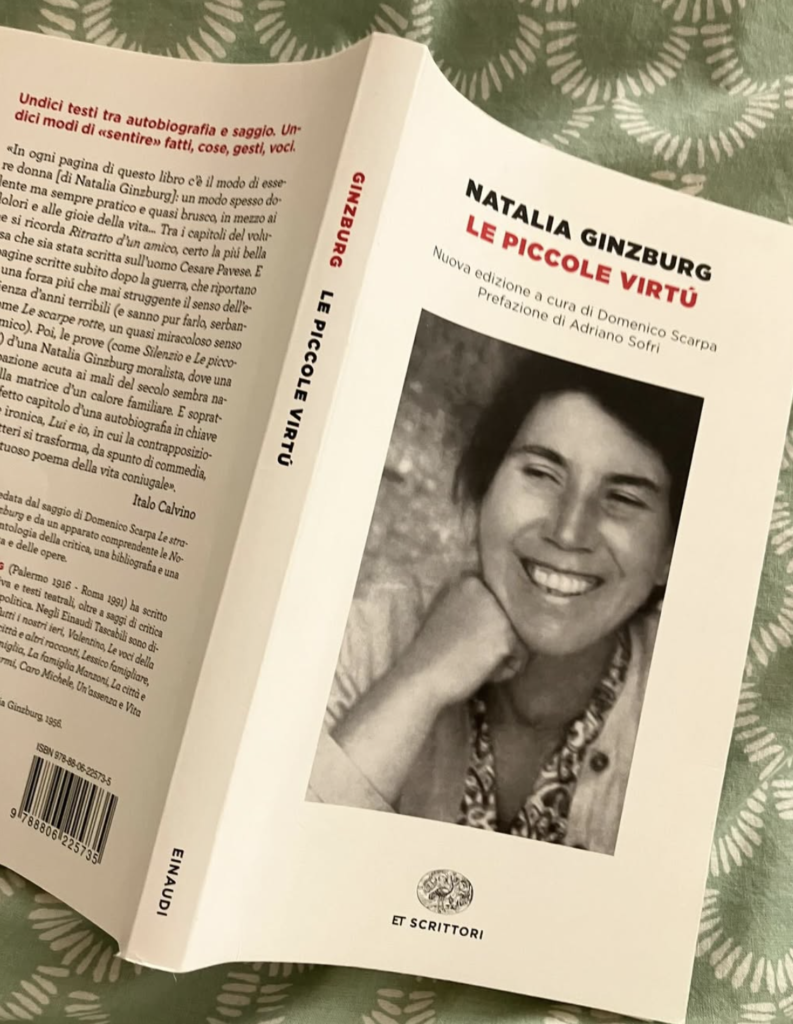
Photo: Instagram Olga Campofreda @thecoldfield
Yet the book serves as a bridge between two worlds—the online and the offline. It allows us to cross between these spaces.
We are increasingly meeting people offline, discussing books in book clubs, at events, in person. But perhaps we originally discovered the event online, or heard about those people on digital platforms. So today, offline events are never purely offline. They remain connected to the digital realm in one way or another.
Yet that is precisely why they are such an essential part of our culture: they mark a return to the physical, to embodied contact, to real-time presence. And furthermore, it’s an exit from the online monologue.
On social media, we often seem to talk to people, but we aren’t actually engaged in a dialogue. We are conducting parallel monologues.
In contrast, offline conversations—especially around books, literature, and culture—are spaces where we genuinely train our critical thinking. That is why, to my mind, it is vital to keep moving back and forth between offline and online, between digital and analog.
Analog culture grounds us. It reminds us what it means to be present in the world.
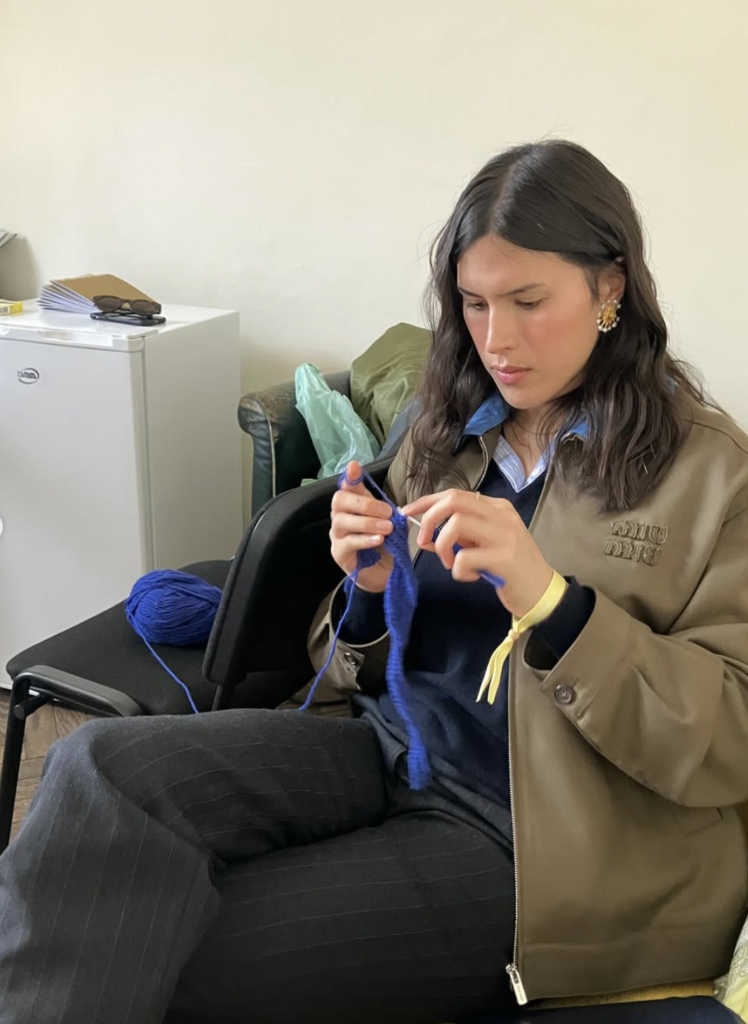
Photo: Instagram Olga Campofreda @thecoldfield
Julia Brosko: That thought about nostalgia really resonates with me. Today we see new terms emerging—like anemoia: nostalgia for a time you’ve never known. How do you feel about it—is it a form of escape from a complex world, especially for younger generations who weren’t there at the time, but want to experience it now?
Olga Campofreda: That’s a wonderful question, and it touches on so many things I’ve been thinking about lately.
There are several types of nostalgia. One is nostalgia for a time you actually lived through. The 90s, for instance. Sometimes I feel nostalgic for the world of the 90s, for the early era of the internet—when I chatted with school friends on MSN, watched my first YouTube videos, and the algorithm wasn’t so bizarre, aggressive, and intrusive. It didn’t immediately feed me things that merely reinforced my existing tastes. I had more room to be creative in my exploration.
I’m nostalgic for that world because I lived it. I know what came after. And that’s precisely why the nostalgia arises.
However, in the past, I’ve also felt nostalgia for eras I never experienced—like the 50s or 60s. I’m deeply fond of the Beat Generation—not just as a literary movement, but as a network of writers, people who approached literature as a living, breathing process. I felt nostalgic for that environment, even though I never lived in it.
To some extent, I tried to recreate those literary circles—the way I envisioned them in early 1950s San Francisco. That is a constructive form of nostalgia. It compels you to find ways to recreate a certain atmosphere to satisfy your curiosity.
To me, nostalgia doesn’t mean getting stuck in the past and failing to move forward. On the contrary, it’s a way of moving forward inspired by the past.
At the same time, there’s another dimension. Mark Fisher, for instance, wrote about the nostalgia for a future that never arrived. Sometimes I feel that kind of nostalgia too. There was a moment in cultural history at the turn of the millennium when the internet could have become something entirely different. It was envisioned as something else. But at a certain point, it took a completely different path.
You can sense this when you listen to talks by Tim Berners-Lee, the inventor of the World Wide Web. In his words, you can read a profound sadness—perhaps even confusion or shame over what the internet has turned into today: hate speech, polarized dialogue, and the isolation of every individual user.
To me, this is a degeneration of the internet. It’s a version of the future we didn’t expect. And nostalgia for a future we never had—and perhaps never will—is far more melancholic than conventional nostalgia. It can even be depressing.
Still, I believe we can choose which type of nostalgia to inhabit. There is a nostalgia that propels you forward and helps you build something for a community. And there is a nostalgia that paralyzes you, freezing your capacity to imagine the future.
Mark Fisher writes powerfully about this—about the ghosts of the past and the future. It’s incredible reading, but deeply depressing. So while I recommend it, read with caution.
Julia Brosko: Today, we speak not only about communication spaces, but also about warfare in the cognitive domain. The internet has become a battlefield for perception and reality.
It has evolved into a struggle across vastly different spheres, specifically over how people will think tomorrow. Speaking of the transition from the past to the future, I’m curious to ask you about the evolution of the female protagonist in literature—from Shopaholics and Carrie Bradshaw to a deeper reflection on the female experience. In your view, how has the contemporary heroine changed?
Olga Campofreda: In classical literature, particularly in Bildungsromane (coming-of-age novels), bourgeois society mapped out a very rigid path for a woman. A man was expected to seek his fortune outside the home, build a name, and achieve status in society. A woman was expected to tend to the household, be a good mother, a good wife, and carry the burden of caregiving for children, husband, parents, elderly relatives—anyone who needed looking after.
Then came feminism, and women were told they could “have it all.” “You can have it all” became the mantra of post-feminism. Once women in Western society gained the right to divorce, abortion, and their own bank accounts, culture essentially declared: now you have emancipation, and you can exercise your freedom through consumption.
If you have a bank account, you’re a feminist if you spend that money. And so we get Carrie Bradshaw from Sex and the City or Becky from Confessions of a Shopaholic—heroines of American TV shows sporting the right t-shirts, the right makeup, the right accessories.
Even in children’s animated series, like Winx, every character has a distinct style that you can buy and replicate.
Girls first encounter empowerment as a form of consumerism.
You feel powerful because you can “be yourself”—and being yourself means buying what you want, or asking your mother to buy it for you.
To me, the 90s and early 2000s were a massive hangover after the illusion that the realization of women’s rights aligned with the freedom to consume. Television back then was somewhat chaotic: Paris Hilton was everywhere, Britney Spears was on constant rotation on MTV.
When I say my novel is for those who listened to “Baby One More Time,” I mean: you know what it feels like to embody and play the role of a girl who must physically be exactly what is expected of her. A girl who is innocent, but not quite. Somewhere in between. A Lolita figure—innocent, yet sexualized.
We were required to be just that. Just as Britney Spears was expected to be a good mother while simultaneously working and generating revenue. But we know that at a certain point, she broke down under the pressure.
Britney Spears is, to me, an emblem of what happened to young women in the early 2000s. We were happy to please. We were told we had to be liked, and so we complied. And those who tried too hard eventually faced the consequences—in the form of depression, dissatisfaction, and disillusionment.
That’s why I believe the evolution of the female image in cinema and literature today centers on finding oneself outside of social rules and expectations. It’s a challenging journey, because first you must have the courage to say “no.” And then—you have to start discovering who you are beyond the template you were taught to follow from childhood.
Girls are socialized very early on to fit into the mold of the stereotypical woman. It starts with the very first doll we are given to play with and identify with.
This story can be read with enthusiasm, because it is truly fantastic to have the opportunity to be yourself. But the process of self-discovery is also painful, complex, and exhausting.
Yet that is precisely where the story lies. It lies in the journey. In all the mistakes you make while trying to discover who you are. In every fall, and every time you stand back up.
To me, that is the most honest, authentic modern novel when a woman is at its center.
Julia Brosko: That really resonates with me. Formally, we have rights. But in reality, many deeper dynamics persist: female visibility in positions of power, business, economics, and politics. Domestic labor hasn’t vanished either. Women still constantly try to balance home, business, and all their other roles. Then online, we read about strong women, see stories about women who can do it all, and we start asking ourselves: why am I, with all these opportunities, not reaching that level? It can be deeply frustrating…
Olga Campofreda: If you consider algorithms, it’s crucial to ask: which bodies do algorithms choose to make visible? What content gets the highest reach?
What type of femininity is deemed acceptable?
For instance, social media platforms occasionally censor or remove images of female breasts, but not male ones, because the female body is automatically objectified.
I recently read about the poet Rupi Kaur, who rose to fame via Instagram. In 2015, she posted a photo of herself lying fully clothed on a bed, but with menstrual blood visible on her sheet and trousers. Instagram removed the content, claiming it was “sensitive.”
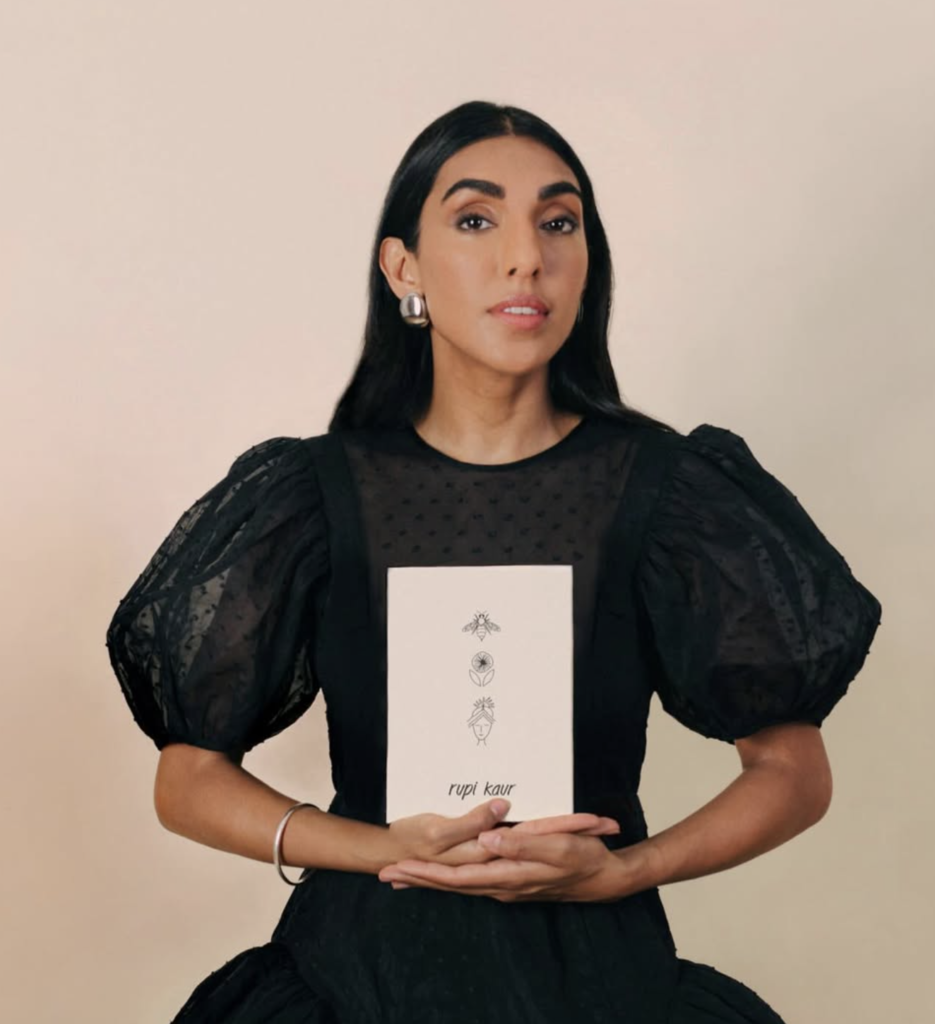
Photo: Instagram Rupi Kaur @rupikaur_
Yet she was fully clothed. There is nothing wrong with menstrual blood. It is a natural part of a woman’s life. The photo wasn’t vulgar or inappropriate. And she raised a vital question: why are algorithms and social platforms comfortable with me showing my body nude or in underwear, but reject me fully clothed if there is menstrual blood on my garments?
That story went viral, and the author who dared to ask that question gained widespread recognition.
This brings us back to what you mentioned: we assume we have our rights, but in practice, a divide persists. There remains a disparity between a world shaped by the male gaze and male cultural optic, and a world that genuinely speaks to the equality of all genders.
Julia Brosko: In closing, I’d like to ask for your recommendations. As an author and researcher, you have a very distinct lens for understanding practices that cultivate creativity. In your personal or professional life, are there authors or practices that help you foster creative thinking?
Olga Campofreda: I draw immense inspiration from other people’s research. I love attending conferences on literature and cultural studies. I am also inspired by online conversations—and by that, I mean I am a chronically online person.
When social media is tuned well—if you’ve trained your algorithm properly—it can serve as an indispensable window into modernity. I live in London, yet I feel as though I’m everywhere at once, because my interests, tastes, and algorithms expose me to a multitude of cultural dynamics.
I believe pop culture is essential for understanding where we are heading as a society. That’s why I reference Britney Spears in my novel. If we talk about the 90s and girlhood in the 90s, it’s impossible not to address what she represented to young women back then.
Today, I’m increasingly intrigued by what we choose to reveal about ourselves online. But naturally, my greatest source of inspiration remains literature and the writings of others.
I can mention a few authors and books. For example, one of my recent top recommendations is Valeria Luiselli. I had the privilege of interviewing her recently in Mantua, and I have a signed copy of her book. In Italian, it’s titled Principio Metà Fine, and in English, Beginning, Middle, End.
Valeria Luiselli is a Mexican author. She also wrote Lost Children Archive, which was a true masterpiece. But this new book, in my opinion, is even better. It’s fantastic because she plays extensively with the novel form, meditates deeply on the act of writing itself, and explores what it means to be a female writer—all while telling a compelling story.
The book revolves around a mother and daughter in Sicily who must travel to an archaeological site to return an ancient mosaic that was once stolen by the grandmother. It contains many reflections on climate change—since Sicilian summers are growing hotter—and on the mother-daughter dynamic. The book is written in fragments, not chapters, like flashes. Flash after flash, you piece together the entire story.
It’s brilliant! She has always been an inspiration to me, but this book took it to an entirely new level.
Another author I admire deeply is the Canadian writer Sheila Heti. She was a guest at the first Miu Miu Literary Club. I love her for the same reason I love Valeria Luiselli: she has the courage to challenge the rules of the novel.
When I read her texts, she reminds me that writing can achieve anything. With a pen or a keyboard, you hold the power to construct an entire world, an entire value system, and to reimagine your own values as a voice and as a writer.
The third author is Vincenzo Latronico with his novel Perfection. He managed to portray the internet as a place—a universe with its own rules, stories, and geography. Perfection is a wonderful book. It speaks to us as a generation and can shape not only how you write a novel, but how you perceive contemporary life.
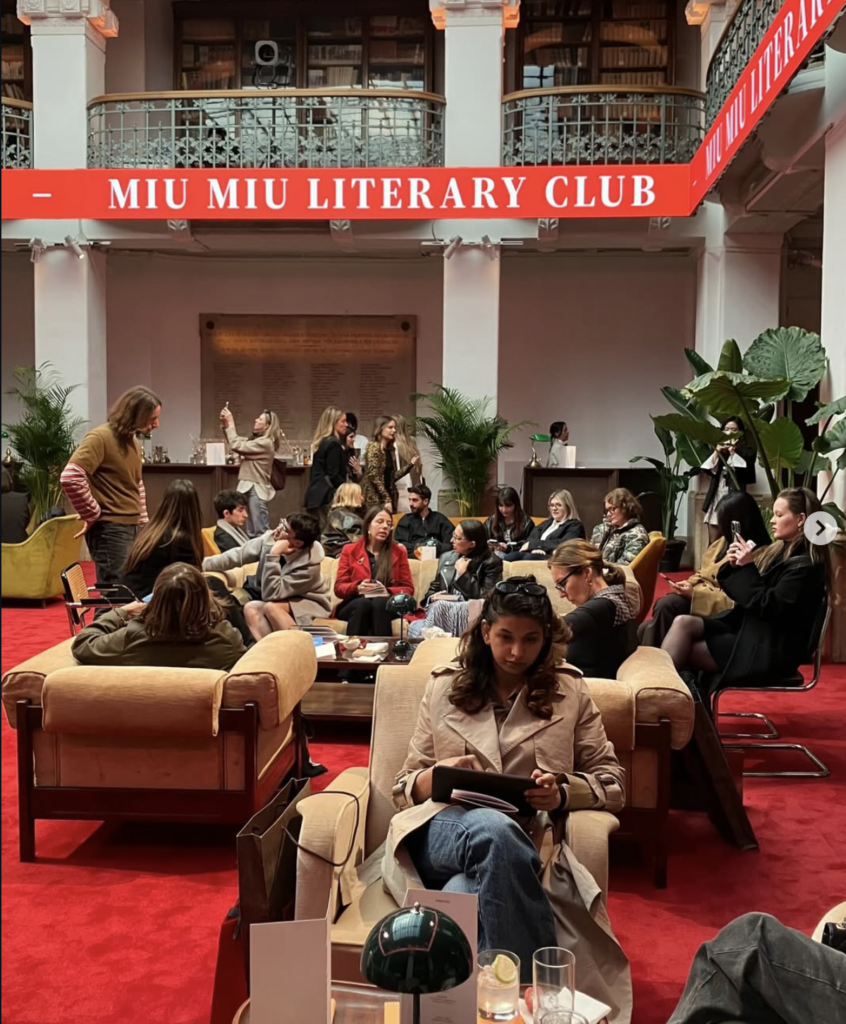
Photo: Instagram Olga Campofreda @thecoldfield
Julia Brosko: You mentioned fragmentarity—which feels very contemporary; that style of storytelling feels natural to us today. But turning to works that can instill a sense of calm, are there authors you would recommend specifically to an Ukrainian audience? Right now, we face a profound deficit of peace and deep relaxation. Are there texts that might help with that?
Olga Campofreda: Perhaps, yes. Thinking about books that can help one meditate on life as a whole, I would also suggest poetry.
I don’t know if you read much poetry, but it can be genuinely therapeutic. For instance, Amanda Gorman, Claudia Rankine, Mary Jean Chan—who is a British poet. I’m not sure if all of them have been translated into Ukrainian, but poetry can evoke a feeling of meditation, insight, and an internal pause.
It is concise, yet essential. Moreover, I feel poetry liberates us from the plastic language of artificial intelligence—which is often homogenized, repetitive, dry, or sometimes overly grandiose and built on stereotypes.
Poetry shatters stereotypes. It is profoundly helpful in teaching us to think differently. To think outside the box.
Interviewer: Julia Brosko.
Editor & Translator: Yanina Provotar.