Svitlana Volkova: “We are taught to change the fashion industry”
Svitlana Volkova / Svitla Volka is a striking example of the new wave of Ukrainian designers for whom fashion is not merely about utilitarian garments, but first and foremost a medium for artistic and social expression.
Already holding a degree in tailoring, Svitlana went on to graduate from Taras Shevchenko National University of Kyiv, specializing in Folklore, Ukrainian Language, and Literature. She is currently continuing her studies in London.
On the eve of the public showcases of her academic projects, we sat down with Svitlana to talk about sustainable fashion, inclusive clothing, as well as the issues of decolonization and cultural diplomacy that stand so critically before Ukraine and Ukrainian culture in the international arena today.
— Tell us about your studies. What kind of program is it, how did you get into it, and how do you feel at this stage?
Svitlana Volkova: Oh, I am absolutely thrilled with my studies! My course is called MA Fashion Futures at the University of the Arts London (London College of Fashion).
Here is the story: I hadn’t planned on studying fashion, and honestly, I wasn’t thinking about continuing my education at all. But in 2023, a professor from the University of New Hampshire in the US came across my digital work dedicated to the defenders of Azovstal. It was a digital fashion show. He was deeply impressed by my approach—the way I try to address critical issues and social responsibility through the medium of fashion.
He decided that he had to bring me to his university to speak to the students and share what it means to practice art during a war. He organized everything from scratch: the visas, the trip, and he even got state senators to write letters of support. And so, I went.
I had a very intense week of lectures, and they all went wonderfully. I felt like an absolute star! Afterwards, the professor took me to New York to show me the city. He took me to FIT (Fashion Institute of Technology) and said, “Svitlana, you belong here, this is your scale.” I began researching programs at FIT and then Parsons, but nothing truly resonated with me.
Then, down the line, I think Instagram showed me an ad for the course I’m taking now. It was the only program that explored the intersection of fashion and politics. I immediately realized: this is exactly what I want to do.
I submitted my application almost on the very final day of the deadline. Everything happened incredibly fast: within a few days, they notified me that I had made it to the second round, and then invited me for an interview. My only chance of attending was securing a full scholarship. I am from Kherson; our house was burned down by Russian drones, and my father lost both of his legs near Bakhmut, so my family support is limited. In the end, I was awarded the largest scholarship—effectively around 50,000 dollars. That is how I ended up in London.
— How does the approach to education there differ from your previous experience?
Svitlana Volkova: Years ago, I studied at Shevchenko University. That was a bachelor’s degree, not a master’s, but the contrast in approaches is very stark.
Back home, there is often a wide gap between the instructor and the students; students feel like they are a step below, as if they know nothing, and they are afraid to speak their minds, trying instead to guess exactly what the professor wants to hear. In London, the only difference between the tutors and you is that they know the course syllabus and you don’t. They are genuinely interested in what you have to say, and they help you find the tools to express it.
We talk constantly. Every single day at the university revolves around discussions, and you are required to voice your thoughts. Perhaps this isn’t the case for every course, because there are traditional pathways like menswear or womenswear, but our program is unique. I really love the definition we use: we are not taught how to succeed in the fashion industry—we are taught how to change the fashion industry.
The course initially launched with a heavy focus on sustainability, but it has now evolved into speculative practice: we build alternative worlds. The goal isn’t to fix a problem instantly, because we live in an era of complex, systemic crises that cannot be resolved overnight. Instead, we synthesize scientific, technological, and historical advancements to present an alternative reality that prompts people to think: what if things could work differently?
The entire curriculum is project-based. The first unit focuses on creating a project and a manifesto—essentially a finished asset you can submit to competitions. Then come several different projects and a vast amount of collaboration. We are constantly interacting with fellow students, creating work that isn’t dictated solely by your own vision. You are continuously exchanging insights with people from all corners of the world. I love this feeling when everyone is deeply passionate about their topic and possesses profound knowledge of it. I truly feel like I am exactly where I belong.
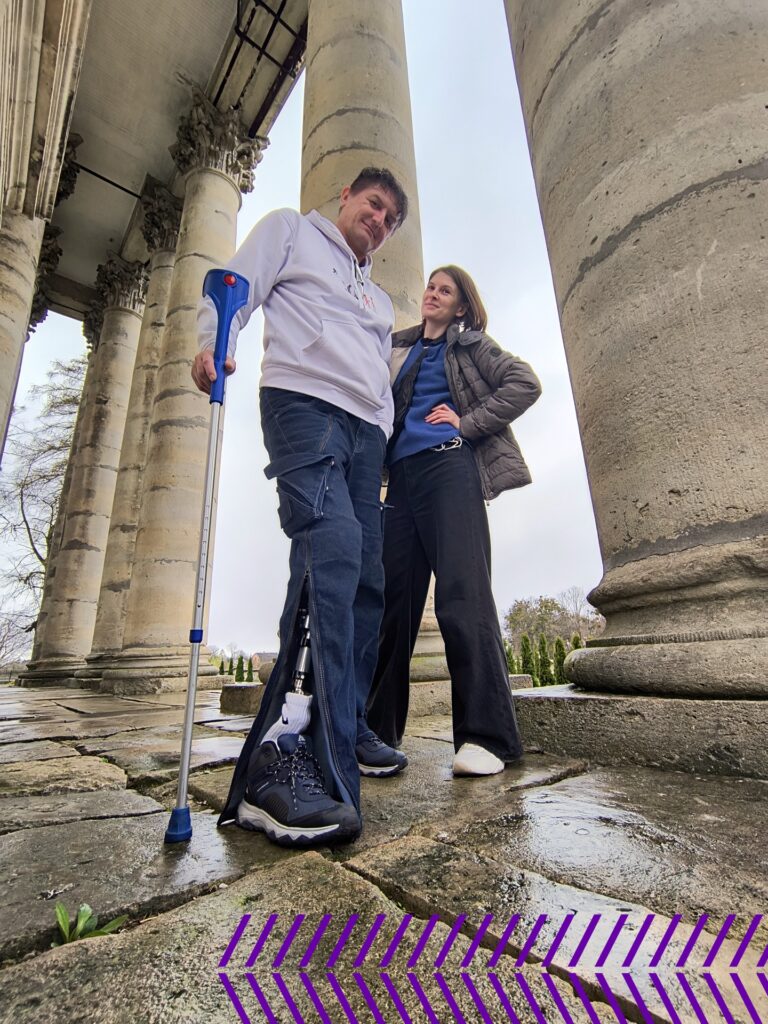
— You work with adaptive clothing, focusing on dignity, comfort, and self-expression through fashion. What do you call this movement, and can it effectively develop in Ukraine?
Svitlana Volkova: I am trying to correct the narrative around calling this fashion “functional.” I am a proponent of Ukraine being part of the global context and ensuring we speak the same language as the rest of the world.
“Functional fashion” emerged in the mid-20th century in the US during wartime. Its goal was to adjust the individual who had suffered an injury so that they could once again become economically productive for society.
Later, this evolved into an “inclusive mindset”: we do not adjust the person to fit the world; rather, we adapt the world so that the individual feels comfortable in all their manifestations—whether they are dealing with mental health issues or physical mobility limitations. And it is about enabling them not just to “function,” but to express themselves. This is no longer just functional fashion. This is inclusive fashion and universal design. Adaptive fashion, in turn, refers to the specific design solutions that make this inclusion a reality.
As for Ukraine, I believe the market is largely ready for adaptive clothing, both financially and mentally. When I was analyzing price points for my product development, I looked at brands like Riot Division, which many veterans purchase. That is an appropriate price point for a segment of the audience—certainly not for everyone, but we are talking about working individuals who strive to grow.
However, in my opinion, the infrastructure for supporting small businesses is not yet ready for large, complex, strategic projects—it is geared more toward quick, situational results. Adaptive fashion is often perceived either as charity (the “let’s quickly whip up some trousers with Velcro, and everyone will be happy” approach) or as a overly simplified grant model: “receive a small sum, hire two people, and by tomorrow you’re selling pies.”
When we talk about a brand that spends its first few years building a reputation, entering international markets, and functioning as a tool for Ukrainian cultural diplomacy, it is perceived as much more challenging.
I feel there is a systemic issue with many support programs in Ukraine. Sometimes, it seems to me that they exist not so much to develop businesses as to maintain the audience they micro-finance, which in turn supports their own management apparatus.
I personally know veterans who, after returning from the war, sign up for programs like “how to start a business in 10 days.” They receive a small grant, only to find themselves in a situation where they must hire staff, but they cannot pay salaries using grant funds. In the end, they take out loans just to keep the business afloat. It’s terrible. I see how this works in Britain, and it is an entirely different level.
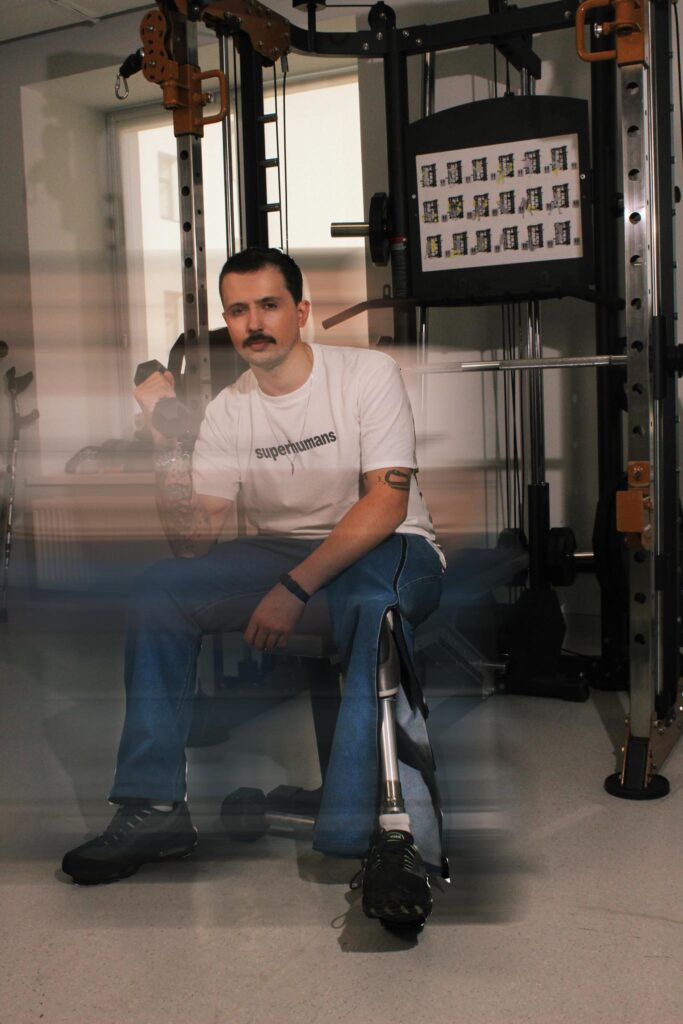
— What stage is your inclusive clothing brand at right now? Did you close your previous jeans project, or are you giving it a new life?
Svitlana Volkova: Right now, I am preparing to pitch my project here in Britain. The pathway here is very well-defined: the university offers a program that allows you either to move toward employment or to build your own business. There are internal university grants. If you win those, you can then apply for inter-university graduate grants. It is a linear, transparent system.
I plan to apply here and keep the same brand and the exact same core concept. The target audience is expanding: from focusing solely on Ukrainian veterans to addressing veterans in both Ukraine and the UK. The product remains firmly in the denim segment, with the first baseline product being jeans as a pilot project.
With the support of Promprylad, we have already manufactured 50 pairs. If I secure the grant, we will distribute them to veterans for user testing and launch a promotional campaign. This campaign won’t just be about fashion, but about socialization through clothing.
Production will remain in Ukraine at a facility based in Kharkiv. I want to bring capital into Ukraine and create a product for Ukrainians, but legally and operationally, the process will be split between two entities: one in the UK and another in Ukraine. There is a genuine, heartfelt interest in this here, and you don’t have to explain to anyone why it matters.
— Ukrainian designers developing inclusive clothing lines are currently facing combinations of trauma and injuries that have never existed on such a scale before. Can these design solutions be universalized for the British market?
Svitlana Volkova: The primary benefit of adaptive clothing and inclusion is that when you create this kind of apparel, it is comfortable for everyone. You aren’t adding features that make usage more cumbersome for other people. Quite the opposite: you integrate solutions that allow an individual with limited mobility to dress and function more easily throughout the day, yet they do not hinder someone with full mobility in the slightest.
We might introduce more complex and less complex models, which will naturally reflect in the pricing. But this is simply about different levels of adaptability: you will be able to buy a pair of baseline jeans, or opt for a design with more intricate construction.
— Recently, Adidas started selling single sneakers in Kyiv. This indicates that big business is moving toward addressing concrete, specific needs. How do you evaluate this global shift from mere declarations to real business practices?
Svitlana Volkova: I believe this trend is only gaining momentum. Adidas has the resources and a responsibility to the public to demonstrate effective and beautiful solutions. However, a even more telling indicator for me is that even Primark has had a dedicated adaptive line running for two years now.
Primark is an ultra-affordable mass-market brand. When design solutions developed in collaboration with a serious influencer who has mobility limitations appear even there—and it’s not a one-off campaign but a permanent, ongoing line—that sends a tremendously important signal to the entire industry.
— You talk about a multiplicity of voices and collaboration at the university. How does this translate into concrete product solutions?
Svitlana Volkova: I work across several dimensions. Adaptive fashion is my practical path, which I am developing within the framework of the Graduate Futures program, where we are actively working toward building a business.
Within the academic curriculum itself, I approach a broader narrative: decolonial practices, the Ukrainian context, and underprivileged people (individuals and communities facing systemic barriers and unequal access to opportunities). For me, this starts with amputees and people with disabilities, but it can be applied to all groups whose voices are unheard or ignored—not just by fashion, but by society at large.
Fashion functions as an infrastructure for society. That is why I also speak of Ukraine as being underprivileged: a country whose voice has long been suppressed or appropriated.
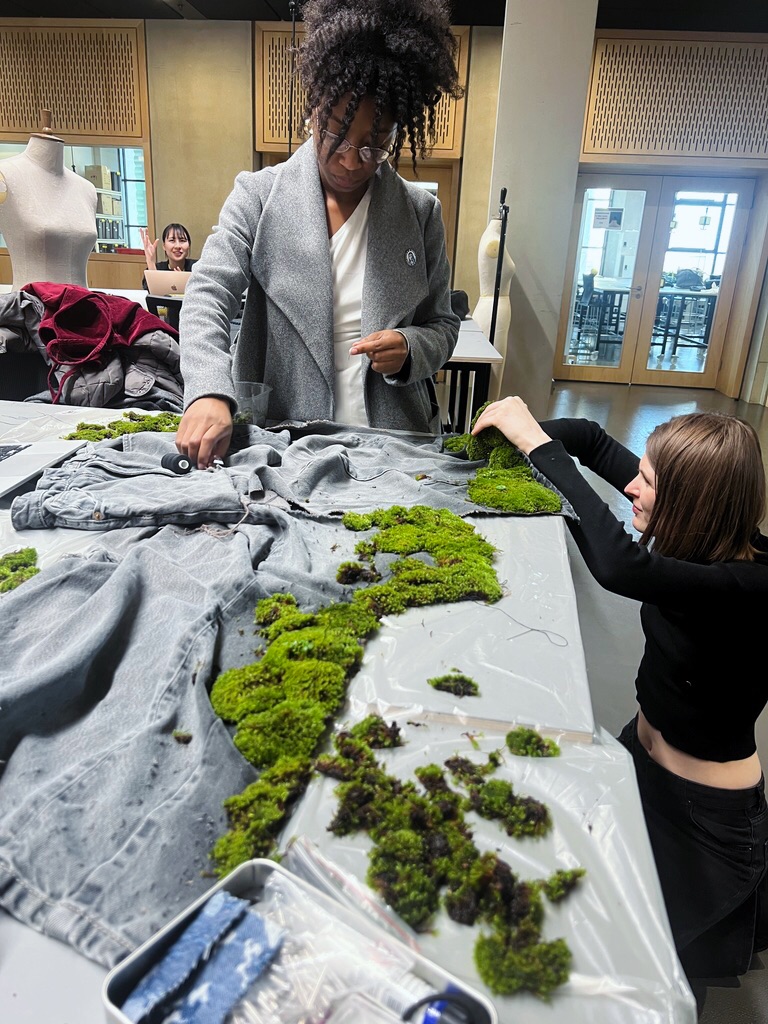
Furthermore, I work with the politics of sustainability, pointing out a systemic flaw in how it is evaluated: sustainability often completely ignores political questions. My latest project focuses on the sustainability of knowledge. If our assessment models and dominant mindset are built on knowledge that historically gained more power to spread—and this knowledge was dictated by empires while wiping out indigenous peoples—then we are all thinking within imperialistic, predatory, and extractive frameworks. We must radically overhaul this optics to stand a chance at building a better future.
When I speak of collaborations, it is a much broader concept. It is about the inclusion of visions and systems, rather than just inclusion in the micro-sense of specific garments.
However, for the adaptive brand, I am more focused precisely on my target audience. Right now, we are developing several design solutions for upper-limb amputees, and this process is taking place in Ukraine. I have connected with several veterans who are willing to provide feedback. One is an older veteran, and the other is younger. The younger veteran wants more complex, tech-driven solutions, while the older one asks for things to be simpler. This is my audience, and I am in a constant dialogue with them. I don’t detach myself from them, and I try, when necessary, to check my own design ego.
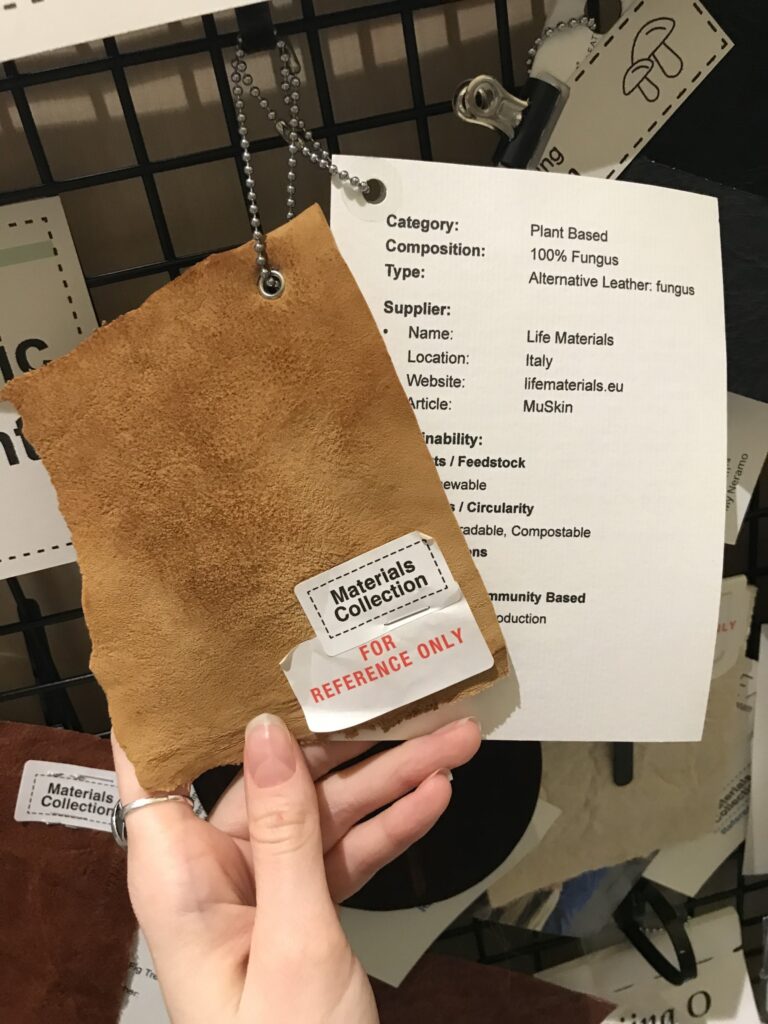
— On your social media, you wrote about a library of alternative materials for sustainable fashion. Which material impressed you the most?
Svitlana Volkova: It’s not that I was shocked by anything, but I really love the tactile feel of a leather-like material made from fungi. It is essentially raw mycelium—simply harvested and dried. It feels incredible to the touch, porous, somewhat similar to neoprene, but much more pleasant and alive. I believe it holds colossal potential for certain products.
On a side note, I submitted a request, and the library has already ordered many innovative Ukrainian materials. Now, they are officially represented at our university here in London.
— In the context of decolonization, fashion is frequently accused of cultural appropriation. Where is the line between cultural diplomacy, promotion, and the exploitation of these cultural codes?
Svitlana Volkova: It depends on who is doing it. If you are working with your own cultural codes and presenting them to the world, you aren’t expropriating anything. You are engaging in cultural diplomacy. I really admire how Britain did this in the past, and later South Korea: they built reputational security. When the world recognizes your codes and values your heritage, it understands that this legacy is something worth protecting.
If, on the other hand, someone from the outside uses authentic patterns that belong to another culture, it is simply a matter of openly acknowledging where they came from and bringing the original creators into the collaboration. It’s actually quite straightforward.
To be honest, this topic isn’t as problematic for me as other issues. My very first project was focused on the brand Pangaia—one of today’s most prominent sustainability brands, backed by massive investments, holding a B Corp certification, earning top ratings on platforms like Good On You, and having direct ties to my university.
I investigated where the funding for this brand was coming from. In my research paper, I traced connections back to Russian resources and funds, addressing how the Russian voice was being legitimized on the international stage through supposedly noble sustainability practices. This was happening at the exact time when Russia was committing genocide and ecocide in Ukraine, yet the international community was marveling at their “super sustainable” practices.
My point is that sustainability that fails to evaluate political contexts—and looks at the supply chain merely from the fiber up, rather than from the primary source of financial capital—is missing a massive piece of the puzzle. It allows for the legitimization of things that are, at their very core, deeply destructive and anything but sustainable.
— And what are you working on right now in this research component?
Svitlana Volkova: In the second academic unit, I am trying to avoid the trap where previously colonized peoples focus their attention exclusively on the colonizers and say nothing about themselves.
Right now, I am building my practice around restoring a panoramic perspective, working with the concept of “soft nationalism.” If we say we care about the land, we must understand exactly who can look after it and who possesses the knowledge of that specific landscape. It is the local community that holds the knowledge of how to interact with the land ecologically and build everything in a way that functions for centuries.
Therefore, in this sense, war is a global environmental threat: it deprives the planet of a future. This is not just about resources or oil; it is about a unique landscape that must be preserved and restored to what it once was.
I am addressing our country’s history and the appropriated Ukrainian artists. I am interested in deeper, non-obvious connections that haven’t been brought up before at the intersection of fashion and politics, or fashion and infrastructure. There are discourses that have already been thoroughly detailed in the academic field. I, however, am trying to find the non-obvious triggers—the ones that, if ignored, cause us to cross the finish line only to realize it was our starting point all along.
— Will this remain purely academic work, or will it still have a connection to a real fashion product?
Svitlana Volkova: To a large extent, these are separate directions. The adaptive brand is a highly practical narrative operating in the here and now, dealing with specific individuals who need targeted, point-blank design solutions.
What I am doing at the university in parallel is research-based scientific work. I plan to pursue a PhD, work with academia, alter global frameworks, and provide the world with the understanding that Ukrainian history is not just about “Russia attacked us recently.” It is a very long history of colonization, decolonization, and resistance. Right now in the West, we are hardly perceived within this framework.
The knowledge that we—as Ukrainians, as an exceptionally resilient nation—can contribute to the global treasury of how to build the future is colossal. It is precisely through academic work and speculative design projects—which resemble conceptual art and can be shown at exhibitions—that I communicate with the international audience within my program.
— Within this paradigm, how do you evaluate the “culture is outside of politics” thesis and, for instance, the return of Russians to the Venice Biennale?
Svitlana Volkova: This is precisely the theme I work with every day. I constantly emphasize the responsibility of artists toward their society. Artists are significantly more sensitive to what is happening around them. We process more signals through ourselves than people with standard jobs. Artists have the luxury to sit and reflect. It is a privileged narrative: you might be sitting there hungry, but you are sitting and thinking.
When, under such circumstances, you fail to respond to the pains of your society and choose to ignore them, you are acting infantily and dishonestly.
Ukrainian artists are dying at the front lines, defending freedom—both their personal freedom and that of their compatriots. They physically lack the opportunity to create art and showcase it abroad. Meanwhile, Russian artists, who allowed all this horror to happen, could have communicated with their society over the last 20 years, could have sounded the alarm, but instead, they chose conformism. And now, on international platforms, they are attempting to silence the war once again.
I weave this into my projects, but I try to speak subtly, metaphorically. It is always better for the viewer to reflect and arrive at a conclusion on their own, rather than just reading your blunt, direct thought and dismissing it due to inner resistance.
In my latest project, I integrate the history of appropriated Ukrainian artists of the past century. Specifically David Burliuk, who is directly connected to my native Kherson region. I introduce the international audience to these facts and speak about my personal heritage that was destroyed or appropriated. My great-grandfathers owned mills in the Kherson region, and I share the story of how all of this was seized, expropriated by the Soviet regime, and how it is now invisible on the global stage or labeled as “Russian.” We find ourselves once again at a point where there is an attempt to make Ukrainians invisible while putting the spotlight on Russians.
— Russia often mimics European practices of amplifying the voices of indigenous peoples who historically lacked their own space to present their art. What are your thoughts on artists from colonized ethnicities within the Russian Federation whom the Kremlin uses to legitimize its presence at international platforms?
Svitlana Volkova: I know of a few bloggers—for instance, a guy from Buryatia and representatives of other minorities—who currently live outside of Russia. They regularly and openly state that their peoples are colonized, broadcast the consequences of Russian expansion, and speak out against the regime. They serve as the true voice of their people abroad.
However, how to act during a specific biennale or any other official event is a personal moral choice for each individual creator who agreed to represent the aggressor state. In reality, there are a million ways of artistic expression. You could show up there, drench everything in red paint, orchestrate a loud performance, expose what Russia is truly doing, and simply never go back. An artist always possesses the tools to convey the truth if they genuinely desire to do so.
If people fall into the same trap that Ukrainian artists of the past century fell into—where the empire first grants a conditional “blossoming” and then cuts down everyone who bloomed at the very root—it shows, at the very least, an absolute ignorance of historical processes. And if it is a conscious stance taken in the hope that “maybe I will escape unscathed and reap the dividends,” then it is pure conformism and direct collaboration with a bloody regime.
Interviewer: Julia Brosko
Editor: Yanina Provotar
Photos: Svitlana Volkova’s personal archive / Facebook