Oprah Winfrey: “Being human is the greatest adventure and the greatest miracle!”
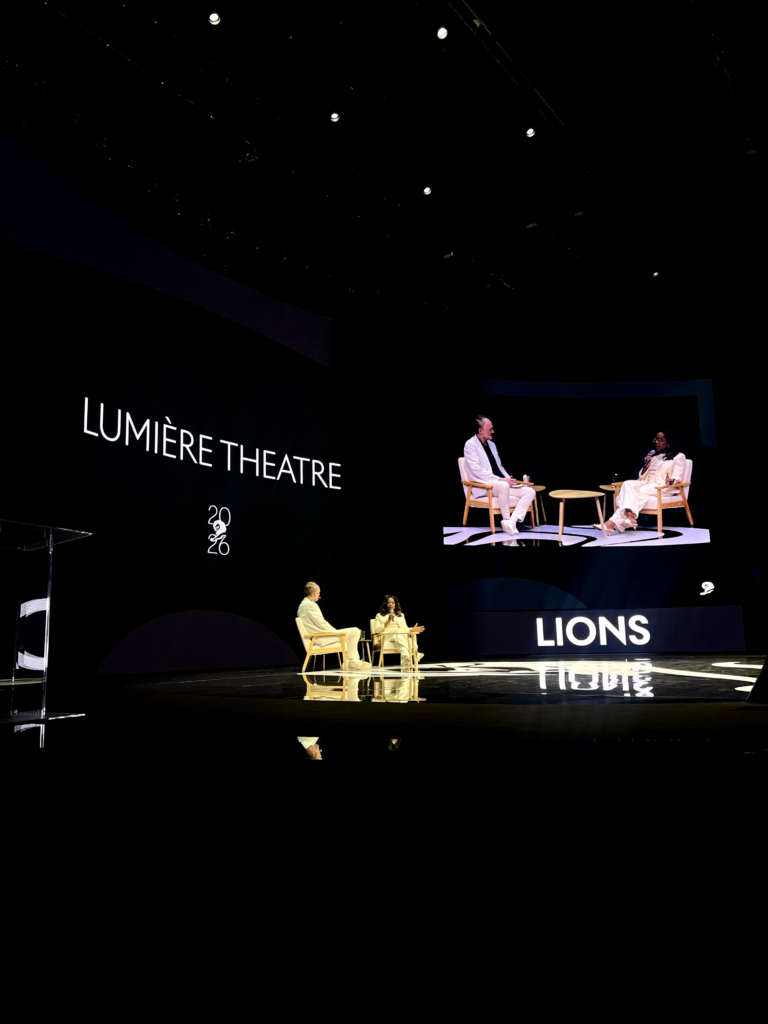
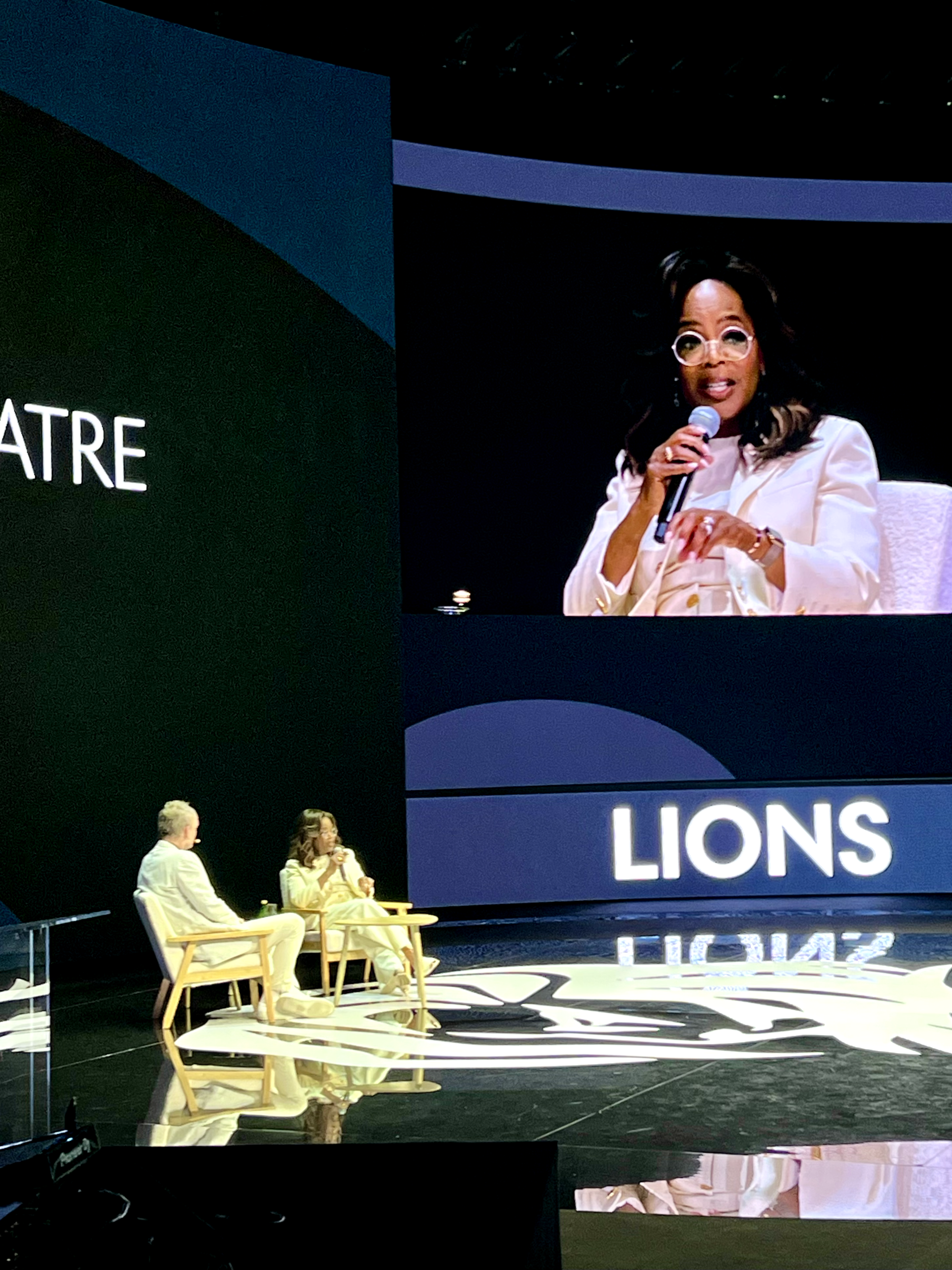
He had been waiting for her for 14 years on the stage of the season’s premier creative event — Cannes Lions. And she finally arrived for the festival’s keynote inspiration talk.
We are publishing for you the translation of the conversation between Cannes Lions Chairman Phil Thomas and the global legend, Oprah Winfrey.
A discussion about creativity, the true spirit of Oprah’s brand, impact, and the legacy we leave behind.
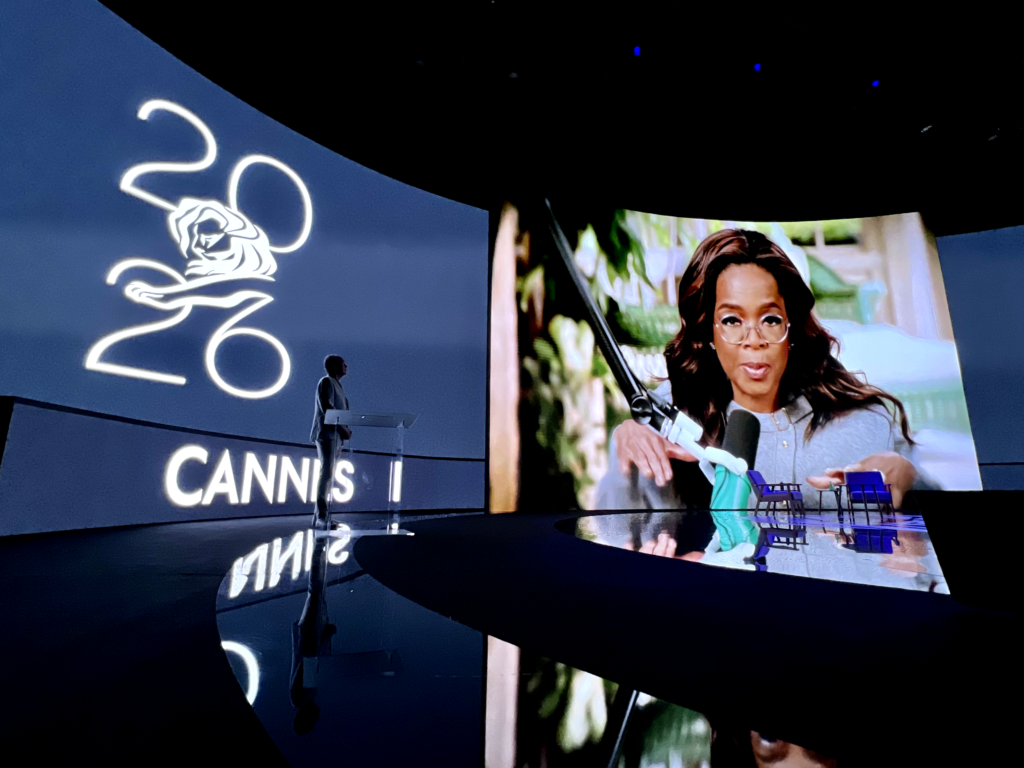
Phil Thomas: We’re here at a festival of creativity, marketing and branding. A lot of people in this room are trying to build brands, and young people are often told to build their own personal brand. You’ve done that in an extraordinary way. How did you build the Oprah brand? How did Oprah Winfrey become Oprah — with the big “O”?
Oprah Winfrey: It’s interesting to be here speaking to people who do this for a living, because when I first started out, I completely resisted being called a brand. I didn’t want to be a brand.
The Oprah Winfrey Show went national in 1986, and by 1989 or 1990 it had become so popular that people started saying I was a brand. Every time I heard that, I hated it. It felt as if the word “brand” took something away from my real intention, which was to be as authentic as possible.
Now I don’t resist it anymore. I’ve accepted that I am a brand. But I also accept that my heart is my brand. I’ve used the essence of what is meaningful, truthful and purposeful to me to create a platform — and then many platforms.
That includes the Oprah podcast on Amazon, and before that, all the years of The Oprah Winfrey Show. The foundation was always the same: creating a platform around what was meaningful to me.
And I think everyone here, whether you call yourself a marketer, creator or brand builder, is actually on a deeper mission. At some point, to be fully human, you have to ask yourself: why am I really here?
Phil Thomas: You’ve often said that brand is really about the “why” — about intention. How did that idea shape your work?
Oprah Winfrey: In 1989, I read a book called The Seat of the Soul by Gary Zukav. That book had a profound impact on me. It talks about what is real versus what is not real, and about seeing beyond the five senses — understanding what is meaningful beyond what we can physically measure.
One of the most important lessons I took from that book was this: when your personality comes to serve the energy of your soul, that is authentic empowerment. And authentic empowerment is something no one can take away from you.
Views, subscriptions, ratings, sales — those things rise and fall. You’ll have good days and bad days, successes and failures. But the most important thing is not to lose sight of why you are here.
You are here to use yourself in service of something greater than yourself. I had already been on that path, but the book helped me articulate it.
After that, I began asking: how do I apply this to television? How do I stop letting television use me and instead use television as a force for good?
Phil Thomas: How did intention change the way you produced The Oprah Winfrey Show?
Oprah Winfrey: I realized that intention is connected to cause and effect. You can’t separate the two. For every action, there is a reaction. What you put out into the world comes back.
Once I understood that, I became much more conscious of why I was doing things. I gathered my producers and told them we were no longer going to do shows unless I was aligned with the intention behind them.
They were confused at first, because they were just trying to book shows. But I needed to have a thread of truth I could hold onto when I sat in that chair. I didn’t want to pretend. I didn’t want to fake it. I needed to be aligned with what the show was trying to say.
So before every important show, we would talk about the intention. After every show, we would ask: did we fulfill it?
The first time I really used that principle was with a mother whose teenage daughter had been murdered by her boyfriend. Before the show, I asked her why she had agreed to come. At first, she said she had come because my producers asked her. But I asked again: what is the real reason?
She said people only wanted to talk about the murder, but her daughter had a life. She wanted to talk about her daughter’s life.
That changed everything. I told her we would tell the story in a way that allowed people to feel her daughter’s spirit, so other mothers and daughters could recognize the warning signs. We weren’t just telling a tragic story. We were trying to save lives.
Phil Thomas: You also used that approach in major interviews. How did it work in those moments?
Oprah Winfrey: Before every important interview, I would ask the person: what do you want to happen here? And I would also say what I wanted to happen.
I did that with Whitney Houston. Before one of our interviews, after we had greeted each other, I stopped everything and asked her backstage: what do you want from this? And I told her what I wanted. That became one of the most powerful interviews.
There was another moment with Whitney later. She came to perform on the show, and she was not well. She fell off the stage. The audience was there, and people had cameras. I begged them not to release those pictures because I knew it would destroy her. And they didn’t.
That kind of trust existed because the audience understood the intention of the show.
Phil Thomas: Someone sent me a video of you at what looked like a photo shoot. You were in a gold dress, with big hair, dancing completely freely. My colleague said she has kept that video on her phone for years and watches it when she doubts herself. She said, “If Oprah can be that free, I can be free too.” What is it like to have that kind of impact on people you may never meet?
Oprah Winfrey: First of all, I didn’t know she was filming me.
But I do know I have impact. I’m not going to pretend I don’t. I started to understand that around 1989, and I realized it could be used as a force for good.
I told my producers that we were not going to let television use us anymore. We were going to use it to serve the viewer.
Every one of us has a platform. For some people, that platform is their family. For others, it is their community or office. I was given the great gift and blessing of reaching millions of people.
But I understood from the beginning that it was not about me. It was about the people I was serving.
When I look back, the Oprah brand happened because we asked: how do we turn this from just a television show into a service for the viewer? How do we reflect their needs, desires, hopes and dreams?
Phil Thomas: How did you stay connected to what your audience needed?
Oprah Winfrey: For years after the show, I signed autographs. That’s what people did then; now they take selfies. I would stand there signing and signing because I thought that was what people wanted.
One day, I couldn’t do it because I had a doctor’s appointment. Afterward, I realized how much energy I still had. So I asked myself an important question: what do I want?
I realized I didn’t want to sign autographs. I wanted to sit down and talk to people.
So after shows, I started sitting with the audience for 30 or 45 minutes, sometimes longer. I would ask where they came from, what was happening in their lives, why they came to the show and what they were getting from it.
That became my focus group. Producers would listen and take notes. We built shows from what people told us was happening in their lives.
The brand was built from my heart — from what I was seeking and what I needed to understand for myself. When I started the show in Chicago in 1984, I was turning 30. I was asking the big questions in life, and I learned I was no different from everybody else. Everyone is looking for answers.
Phil Thomas: You’ve often talked about validation — the need to feel seen and heard. When you were young and just starting out, what did you want people to hear from you?
Oprah Winfrey: I don’t know that I knew it in the beginning. I grew up in Kosciusko, Mississippi. I had no idea there was a Cannes festival. I grew up with no running water and no electricity. I churned butter and took cows out to pasture.
One thing I learned early was the meaning of excellence. In third grade, I turned in a book report early. My teacher was so impressed that she told the other teachers. That’s when I realized that when you do something better than expected, people tell other people.
But on the deeper level, what I have learned is that everyone wants to know: do I matter?
After almost every interview, guests would ask some version of, “Was that okay?” It happened with Barack Obama. It happened with Beyoncé. It happened with people during commercial breaks. Everyone wanted to know: did I do okay?
Eventually I understood that “Am I okay?” is a common denominator in human experience. Every argument is really about that. Do you hear me? Do you see me? Does what I’m saying mean anything to you?
You can end an argument or calm a critical situation by validating what someone has said. You don’t have to agree. You can say, “I hear you. I hear that this is what you want.” That alone matters.
Phil Thomas: You’re receiving the LionHeart Award for making a difference beyond your day-to-day work. Your philanthropy is significant, especially your school in South Africa. How do you decide whom to help and how to help?
Oprah Winfrey: Everybody’s life has obstacles and trials. The way I approach everything is to use what has happened to you to lift yourself to higher ground.
When I was a child, I discovered there was no Santa Claus because my mother told us we were not going to have Christmas. That night, nuns came to our house after midnight and brought toys for my brother, sister and me.
It wasn’t really about the toys. I had wanted a Barbie and got a Tammy doll. But the important thing was that they showed up. They let a 12-year-old girl know that she mattered.
Years later, when I was building my house in Montecito and construction was delayed, I was supposed to move in by Christmas but couldn’t. Instead of being upset, I thought about the best Christmas I ever had — the one when the nuns came. I decided I wanted to do that for other children.
So I went to South Africa. I visited orphanages across different provinces and brought Christmas gifts, clothes and supplies. During that trip, I stayed at Nelson Mandela’s house because he asked me to.
At the end of the trip, I told him I wanted one day to build a school in his name. He said I should build a school in my own name. Then he called the Minister of Education, and suddenly the dream became real.
I built that school because I had been a poor girl on a dirt road in Mississippi, and I saw girls in villages who came from similar circumstances. It felt like I was mirroring my own life and giving opportunity to children who came from what I came from.
Phil Thomas: So the way you help others is connected to your own story?
Oprah Winfrey: Yes. Whatever disadvantages you’ve had in your life, they are not there because life is trying to punish you. They are there to grow you, to teach you, to move you to the next level.
So when challenges come, ask: what is this here to teach me?
That is also how you choose what you want to do. You help people who come from something you understand, something you have experienced, something you have a relationship to.
It shouldn’t be just about writing a check. In everything you do, you should use the heart of yourself.
Your bigger job on this planet is not to be the best creator, the best talk-show host or the best podcaster. It is to become the best human being you can become.
Phil Thomas: You once said the school would be your greatest legacy. Then Maya Angelou corrected you. What did she tell you?
Oprah Winfrey: After I built the school, I went back to Maya Angelou, who was a poet, author, mentor, friend, sister and mother figure to me. I told her, “The school is going to be my greatest legacy.”
She said, “You have no idea what your legacy will be.”
I insisted that the school would be it, because of what the girls would accomplish. And they have accomplished extraordinary things. We recently had a survey done by the University of Cape Town, and it showed that the school has interrupted poverty. That was my intention: to change the trajectory of their lives.
But Maya said, “Baby, your legacy is not your name on a building. Your legacy is every life you touch.”
And that is true. Your legacy may be the girls from that school. But it is also everyone who went back to school because of a show. Every woman who watched a show about domestic abuse and decided to make a plan to leave. Every parent who watched a show and decided not to hit their child anymore. Even everyone who got a better bra because of a show about the wrong bra size.
Your legacy is every life you touch.
Phil Thomas: What would you want creators here to take from that?
Oprah Winfrey: What you are doing is not just about making money or creating influence. That can be fine, but it is secondary.
You have a bigger calling.
Being here as a human being is the greatest adventure and the biggest miracle. The fact that you are you is incredible. The fact that I am me is incredible.
My parents were never married. I was born out of wedlock in Mississippi in 1954. Nobody expected anything from a Black girl born in those circumstances. And my parents were together only one time. One time. That is the miracle of my life.
It doesn’t matter how you got here. The fact that you are here is the miracle.
The question is: how will you use it? How will you continue to fulfill the fullest, highest expression of yourself? That is why we are all here as creators — to use what we have to create value in our work, but also to think about the bigger picture of our lives.
That is the goal.
Recorded by: Julia Brosko.
Editor: Yanina Provotar.
Photos by: Julia Brosko.