“Echos” — A Public Space Art Intervention by Daria Koltsova at the Opening of the 61st Venice Biennale
Daria Koltsova, a Ukrainian artist based in Paris, has realized an art intervention in the public spaces surrounding the world’s premier contemporary art platform — the 61st Venice Biennale.
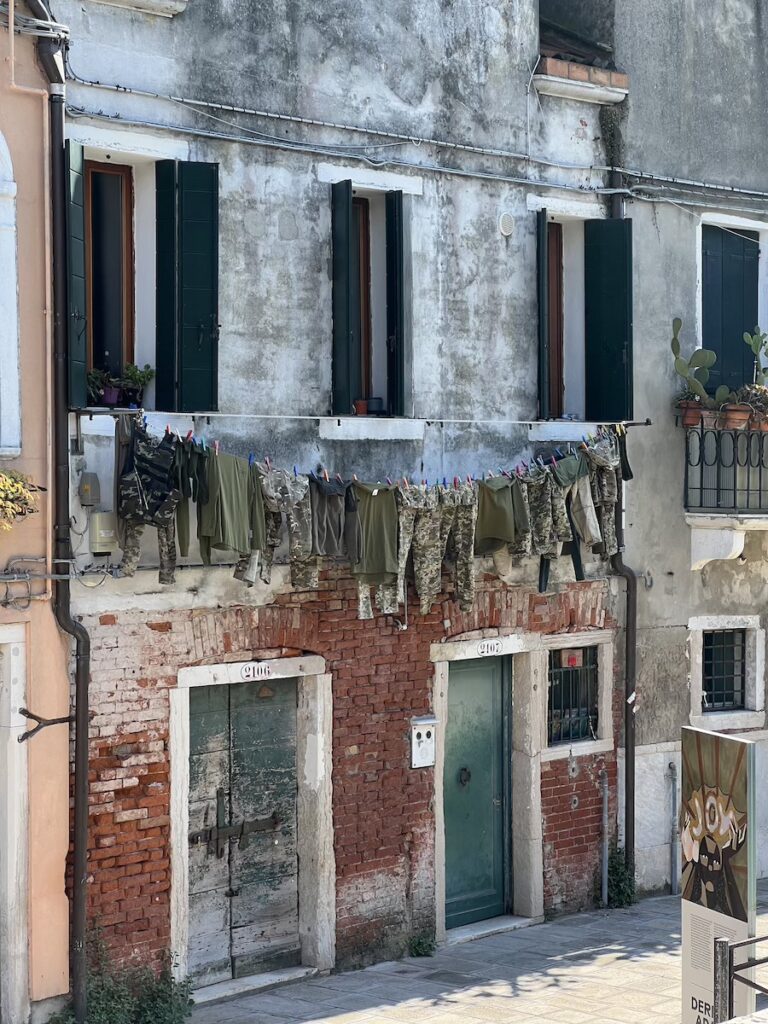
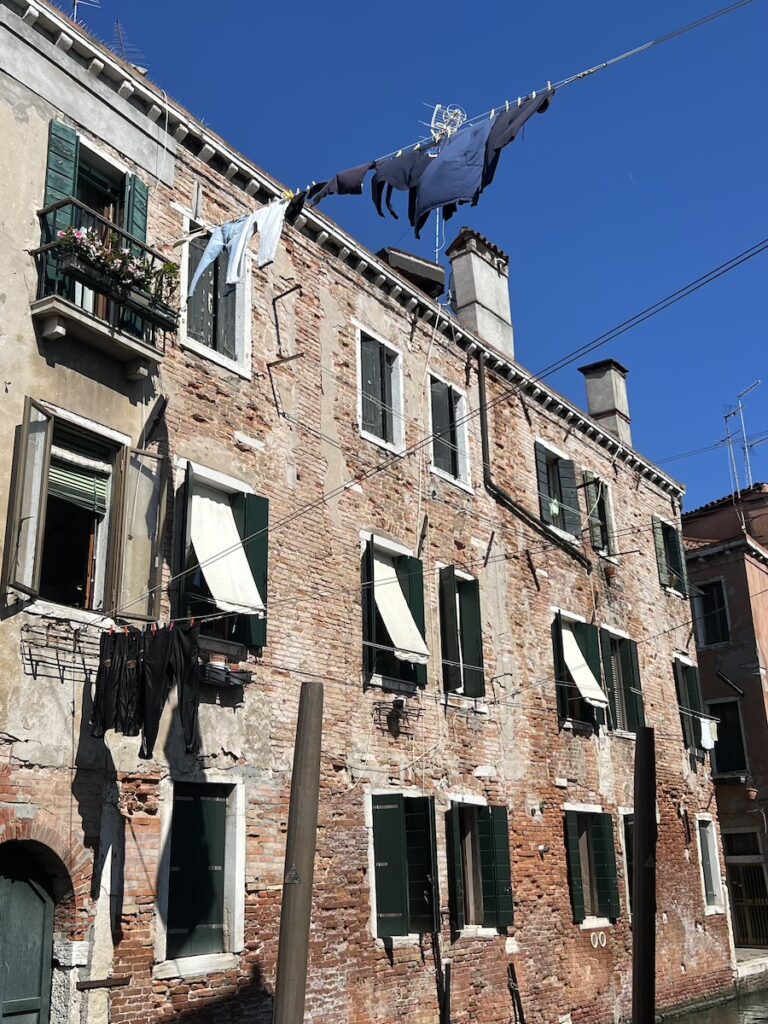
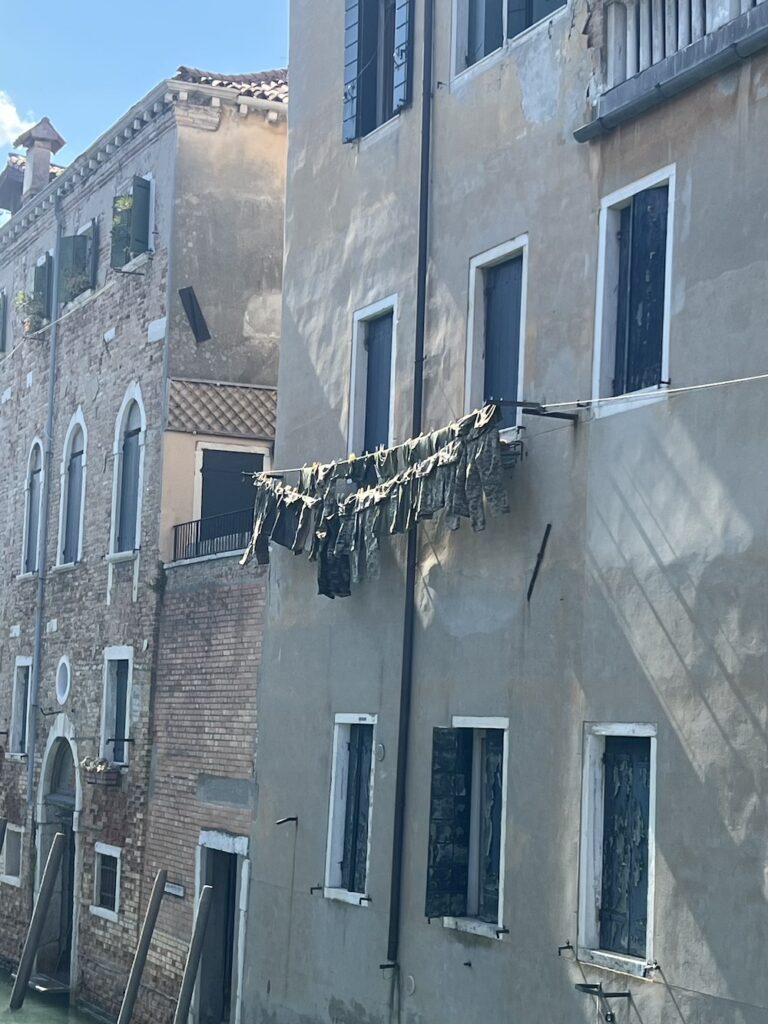
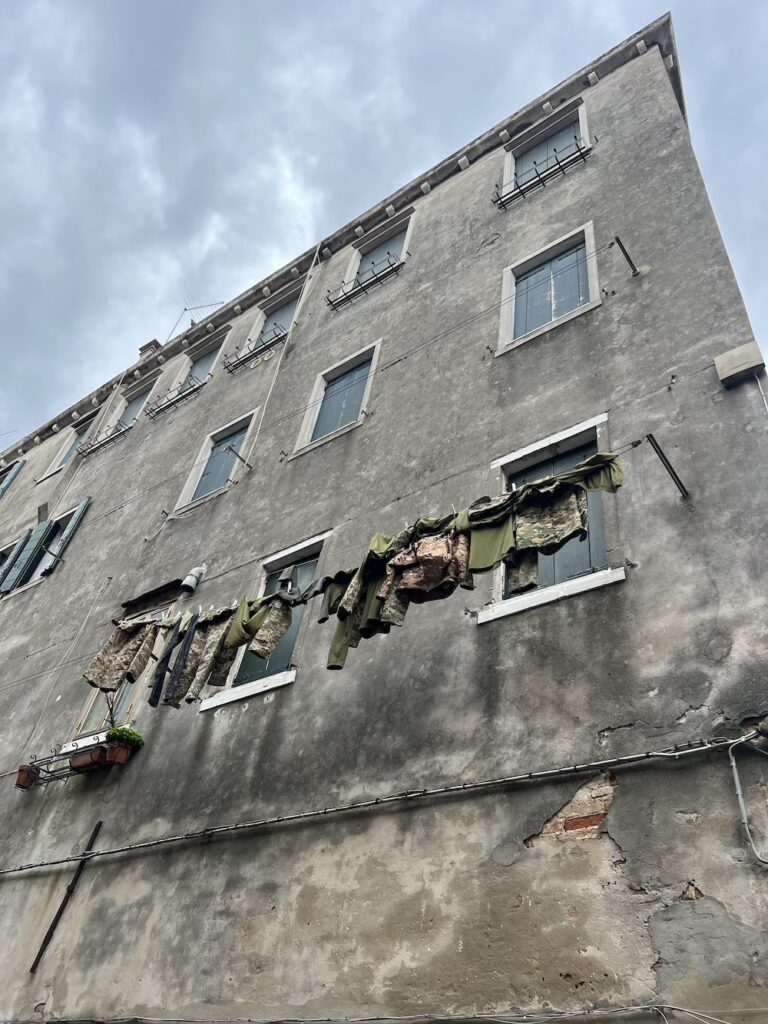
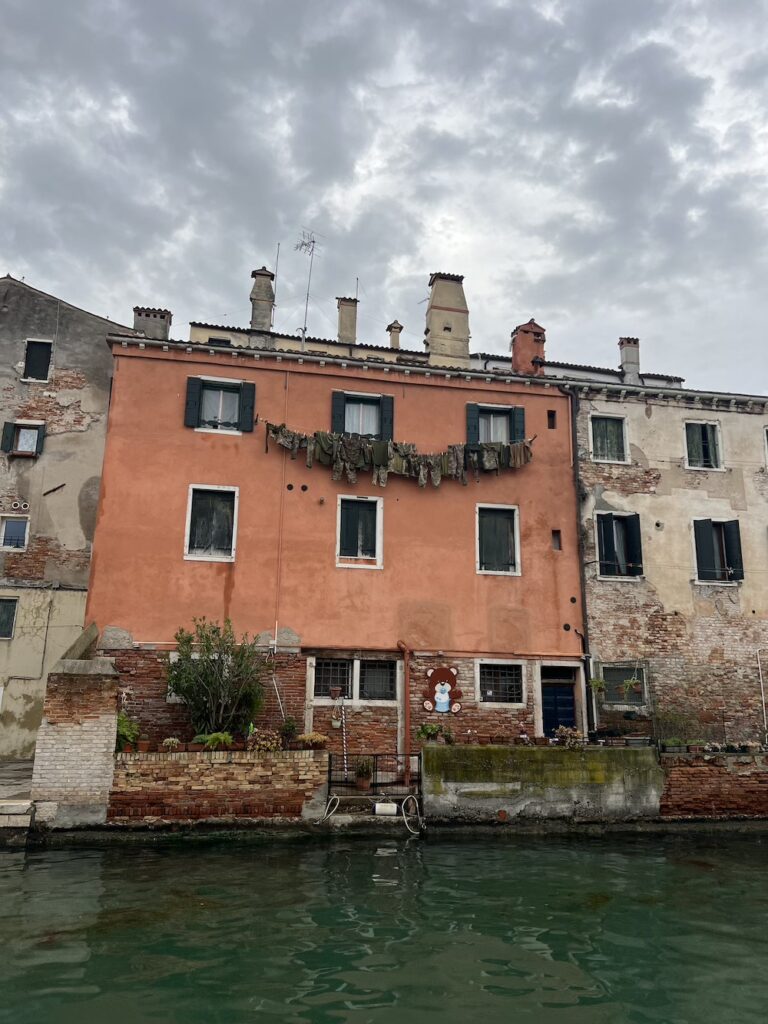
The project is a call to maintain global attention on the war in Ukraine, utilizing the iconic visual language of Venice: the local tradition of hanging laundry on clotheslines outside homes, across canals, and over narrow streets.
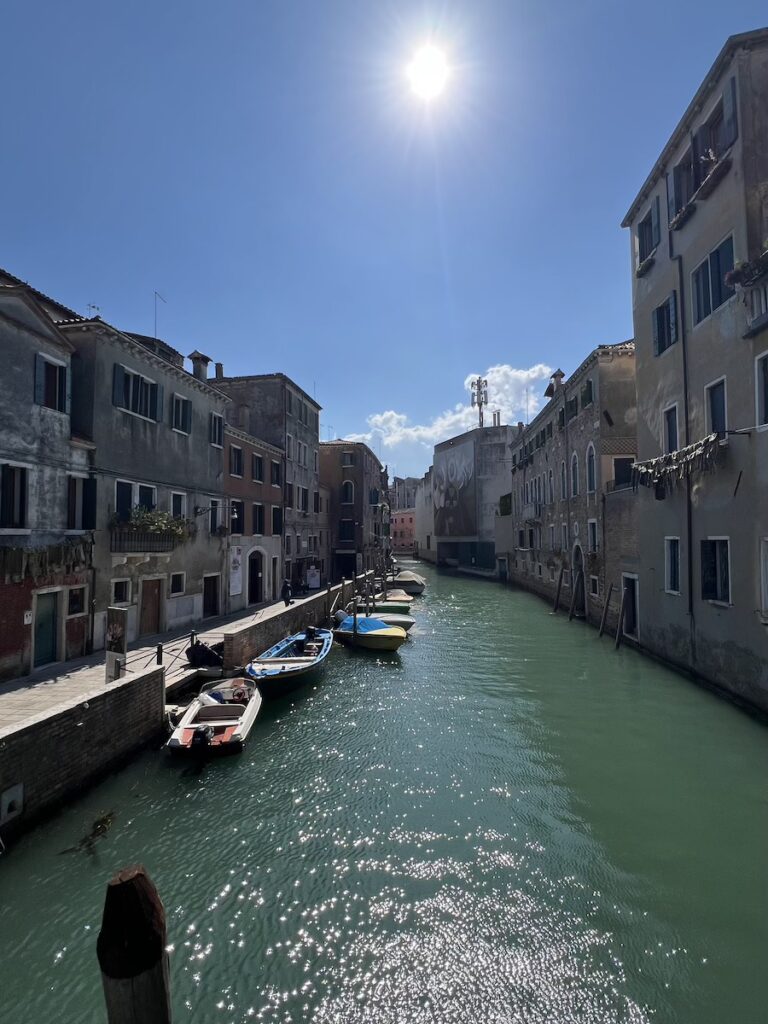
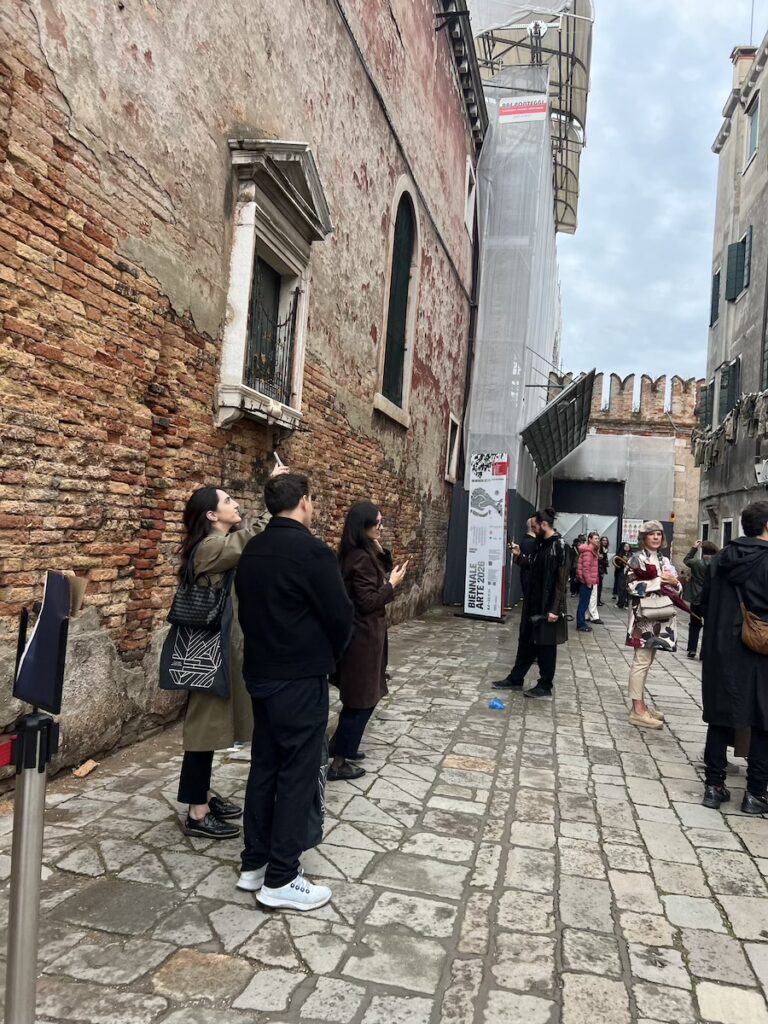
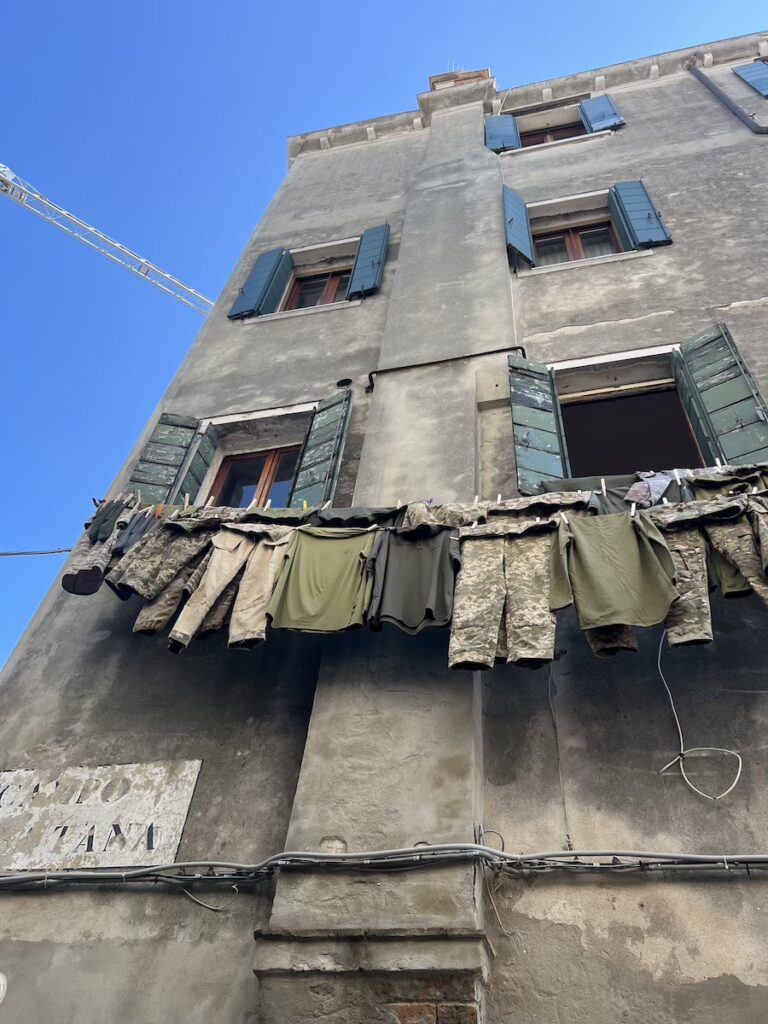
On the clotheslines of residential buildings near the entrance to the Arsenale, Koltsova has displayed authentic military uniforms.
“In Venice, these clotheslines with laundry are everywhere; they are the city’s true visual code. It is a language through which the city speaks: you can decode it to understand who lives there, how they live, what they love, and whether there are children or elderly people in the house. For instance, the gondoliers’ lines are always black. You can read these lines to see what is happening in people’s lives. I thought: since this is their language, it would be powerful to communicate something of ours through it.
I began researching the architecture of this specific district near the Biennale—around the Arsenale and Giardini. I discovered a street called Ramo de la Tana. It turns out that Tana is the ancient name for the Azov region (Tanais — Ed. note). The street was named so because the hemp and materials used for rope-making were brought to Venice specifically from that region.
I started asking my artist friends for their uniforms. It felt essential that the artists who are currently fighting and cannot attend the Biennale be present here, at least in this metaphorical form. As I delved deeper into history, I learned that Venetian ropes were traditionally made by women. It was the first official job for which the Church allowed women to leave their homes. Since it was impossible to make a several-hundred-meter-long cable at home, they were permitted to work in workshops, which fundamentally shifted the social structure.
I thought: ‘My God, we have so many women currently serving in the military! It is only right to speak about this as well.’ So, I began collecting uniforms from servicewomen. Tata Kepler also provided a uniform from the Azov unit. Ultimately, this project features real uniforms that have witnessed everything: clothing from women in the military, artist-soldiers, and the Azov defenders,” the artist comments.
The project runs from May 6th to 9th during the press previews and the official opening program of the Biennale.
#Ukrainian #Culture
Text and photo: Julia Brosko. Editorial staff: Tetyana Vevryk and Nadiya Fomina.