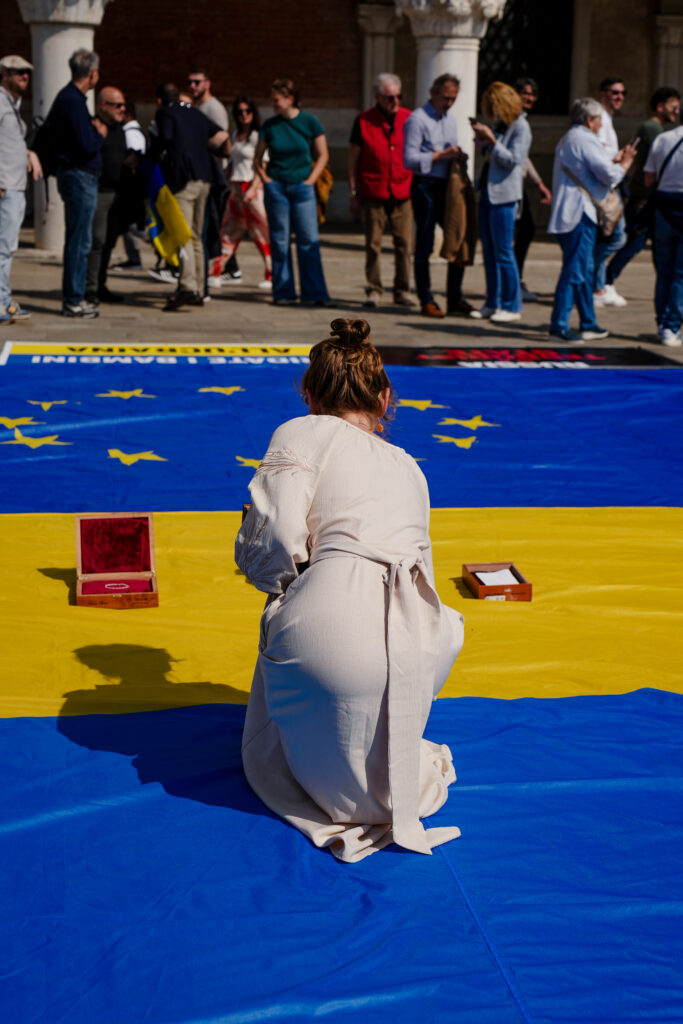
Chronicle of Ukrainian Resistance: Italian Artist Presents “Relic” Project in Venice Amid Protests at the Opening of the 61st Venice Biennale
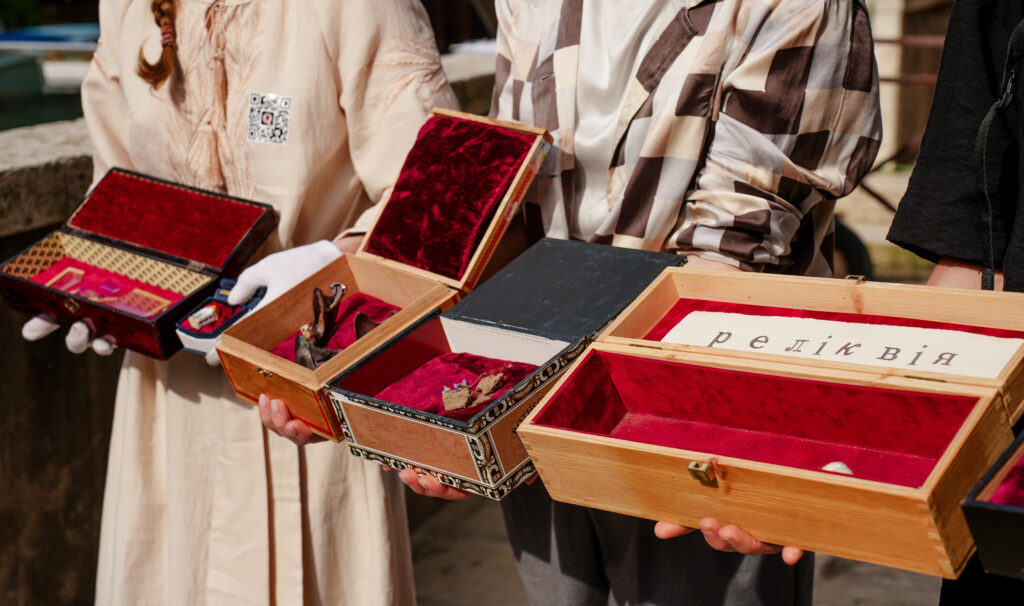
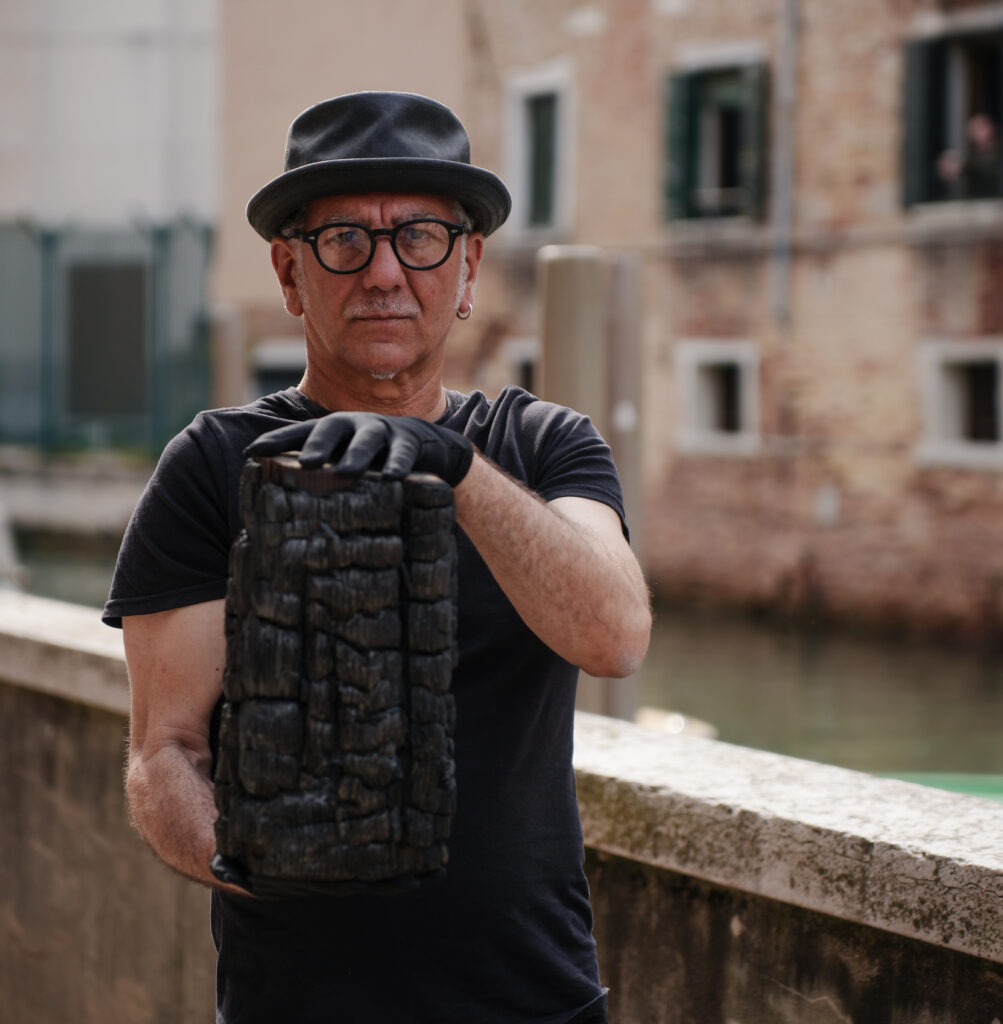
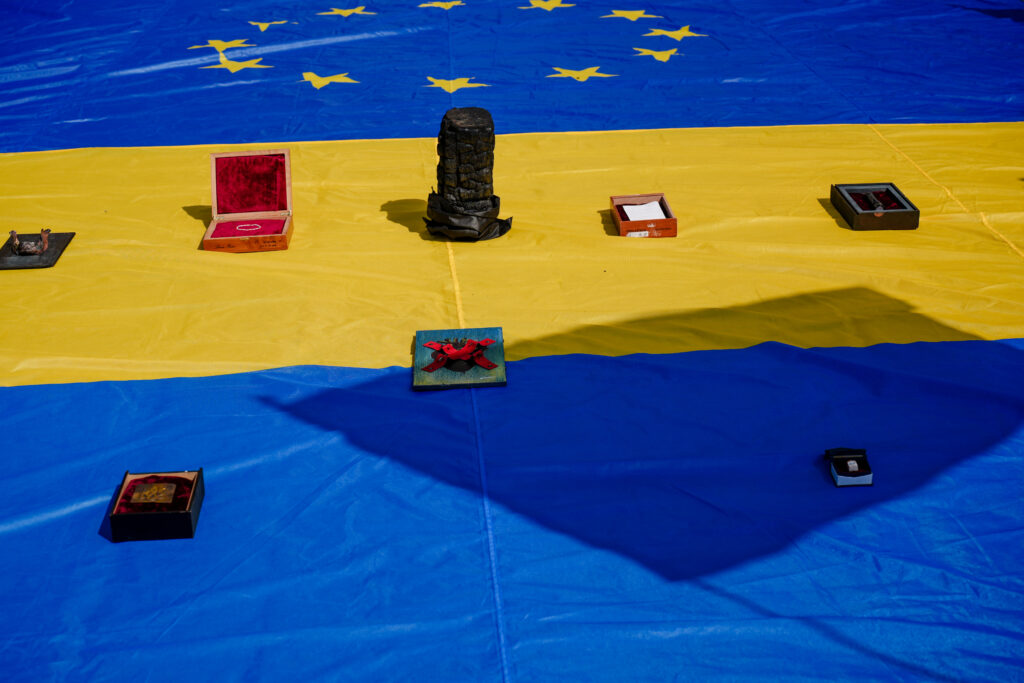
On May 9, Italian artist Walter Trento performed an art action in support of Ukrainian culture titled “Relic.” As part of the campaign, the artist collected artifacts, testimonies, everyday objects, poetry, and memories in Ukraine, which were entrusted to him by Ukrainian artists.
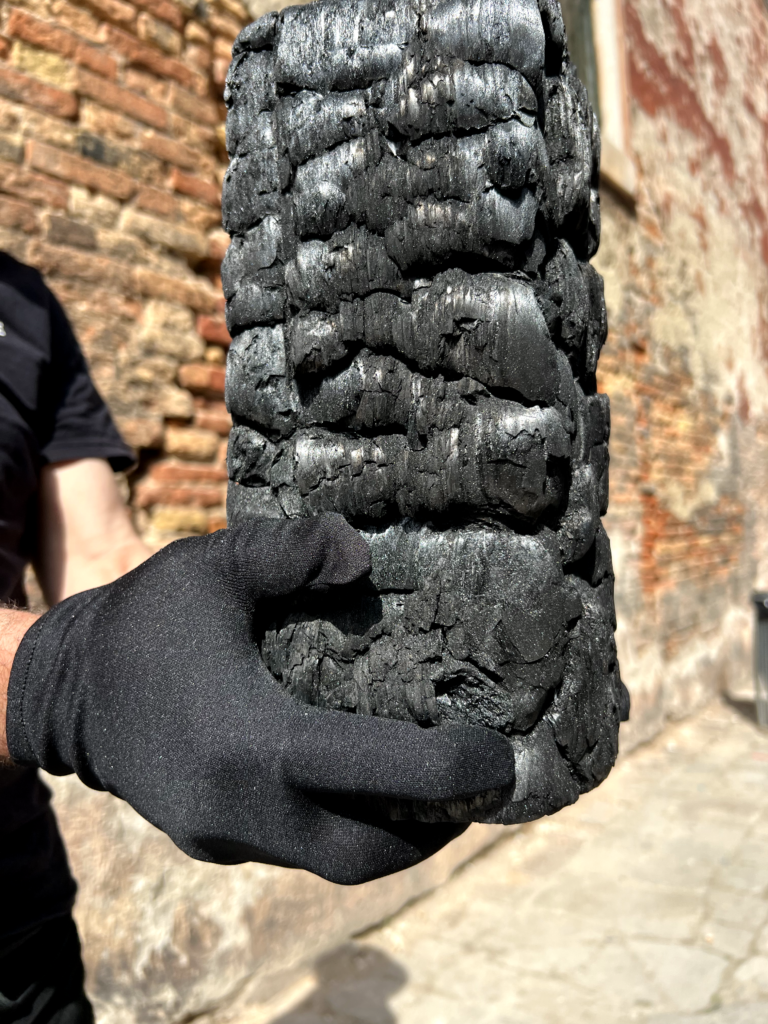
The collection features unique objects: ranging from soil from the garden of Borys and Oksana Denysevych, a fragment of a roof beam from the Bernardine Monastery in Lviv (struck by a Russian drone), and a brick from an Odesa building — to poetry by Haska Shyyan, a napkin belonging to Irena Karpa’s grandmother, sketches by Marko Halanevych, and a flashlight used by writer Oksana Stomina to continue writing in Mariupol during the occupation.
According to the concept, these “ordinary things” are compiled to demonstrate the imprint of time, inviting reflection on the experience of the full-scale war through the human stories of Ukrainian cultural figures.
Walter Trento identifies the catalyst for this artistic statement as the decision by the Venice Biennale leadership to allow Russia to participate in the 61st exhibition as part of the official program.
“When the war in Ukraine began, I had this idea — perhaps to go closer to the front lines, to my friends, to the artists who are there on the ‘zero line.’ But I am not a journalist. I simply wanted to share ideas and concepts with my fellow artists.
And then, when the Director of the Venice Biennale Foundation decided to open the Russian pavilion, it became a compelling reason for me to react. Because by doing so, you are legitimizing a crime. You are destroying your own freedom, your own democracy. This is similar to what my grandfather fought against when he was young — just as Ukrainians and other peoples of the former Soviet republics are doing. But today, we live within our comfort zone, in Western democracy, with rights and stability.
And yet, you have the audacity to open a pavilion for a criminal regime. To me, it is absolutely clear. I know this context; I am from Southern Italy, I know how the mafia system works. Putin’s system is a mafia system. It is a macro-mafia.
When the mafia controls the state, when it becomes its administration — that is exactly what is happening. And when I hear people say that politics should not dictate what art or culture should be, to me it means this: politics decides your life. Even if you are not interested in politics, politics is interested in your life. In the schools of democratic countries, you are taught about human rights, democracy, and opportunities. And yet, you accept such a system — and for me, what is happening now is unacceptable,” the artist comments.
The presentation of the project in Venice was supported by the Network of Associations for Ukraine (NAU).
“I believe Walter had the right intuition — and that is exactly why NAU supported this protest. Walter Trento collected objects that might seem ordinary at first glance, but through a new artistic framework and context, they have been transformed into a chronicle of Ukrainian resistance. Behind each object stands a very specific story, yet they reflect the daily experiences of countless families. Soil from the ‘Garden of Eternal Love’ belonging to the Denysevych family is a memory of Danylo, their fallen son; but it is also a connection to every Ukrainian garden where people live, using love to endure the pain of loss. The flashlight that Oksana Stomina used to write poetry in Mariupol’s bomb shelters during the siege is a concrete, deeply personal item — but it reminds us of thousands of other flashlights in thousands of other shelters used by Ukrainians in the darkness. There is also a level of universal symbols: soil as the source of life and the final resting place; light that helps creativity conquer the darkness.
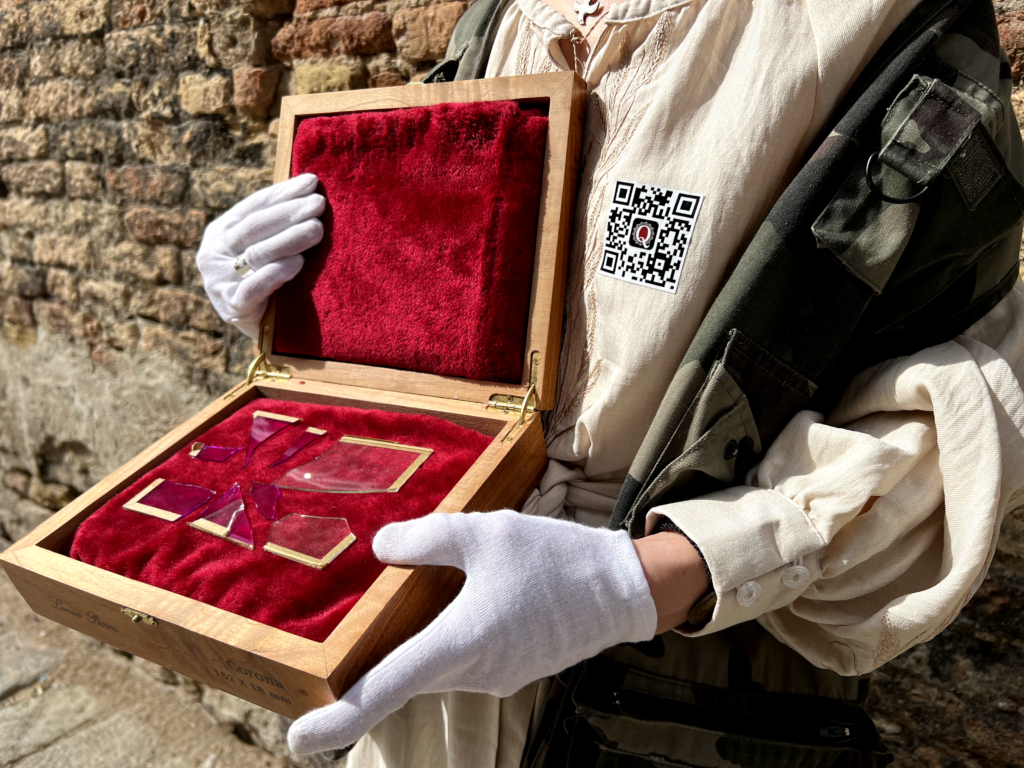
Today, Walter’s relics were carried during the procession not only by Ukrainians but also by Italians who stand with us. In the future, all of them will be presented at an exhibition in the museum of Cisternino as witnesses to how war intervenes in human destinies and how Ukrainians continue to resist, despite all challenges,” comments Maryna Sorina, co-founder of NAU.
Starting May 30th, the “Relic” exhibition will open at the Church of Santa Maria di Costantinopoli. The full list of relics is available at the link.
Text: Julia Brosko, Oriy Vydybai-Yuran.
Translation: Nadiia Fomina.
Photo: Anastasiia Havrylenko, Julia Brosko.